





Rivermate logo

Global Employment Guides

16 mins read

Best EOR Services in India: 2026 Guide for Employers

Published on:

Jan 19, 2026

Updated on:

Jan 19, 2026

Rivermate | Best EOR Services in India: 2026 Guide for Employers

Best EOR services in India: 2026 Guide for Employers

India is a top destination for global hiring, with a huge pool of skilled professionals across tech, engineering, operations, and support. The nation's very large pool of English-speaking professionals, combined with competitive salary structures, makes it a very attractive hotspot for global workforce expansion. It is a great market to build a team, but the admin side can catch foreign employers off guard.

Compliance in India is layered. You are dealing with central labor rules plus state-level differences, and payroll has to account for statutory items like Provident Fund (PF), Employee State Insurance (ESI), and Tax Deducted at Source (TDS). On top of that, the paperwork matters. Contracts, onboarding documents, and the records tied to payroll and benefits need to be done correctly and kept in order.

That is why many international companies use an Employer of Record (EOR) in India. An EOR helps you hire quickly while keeping payroll accurate and documentation compliant, without having to build local infrastructure first.

TL;DR: The 10 best Employer of Record (EOR) services in India

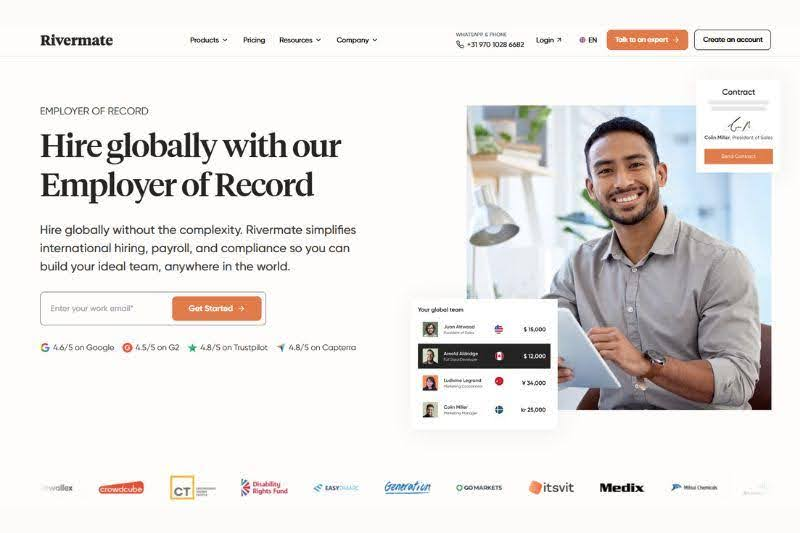
Rivermate: Best overall EOR for India compliance & fast onboarding

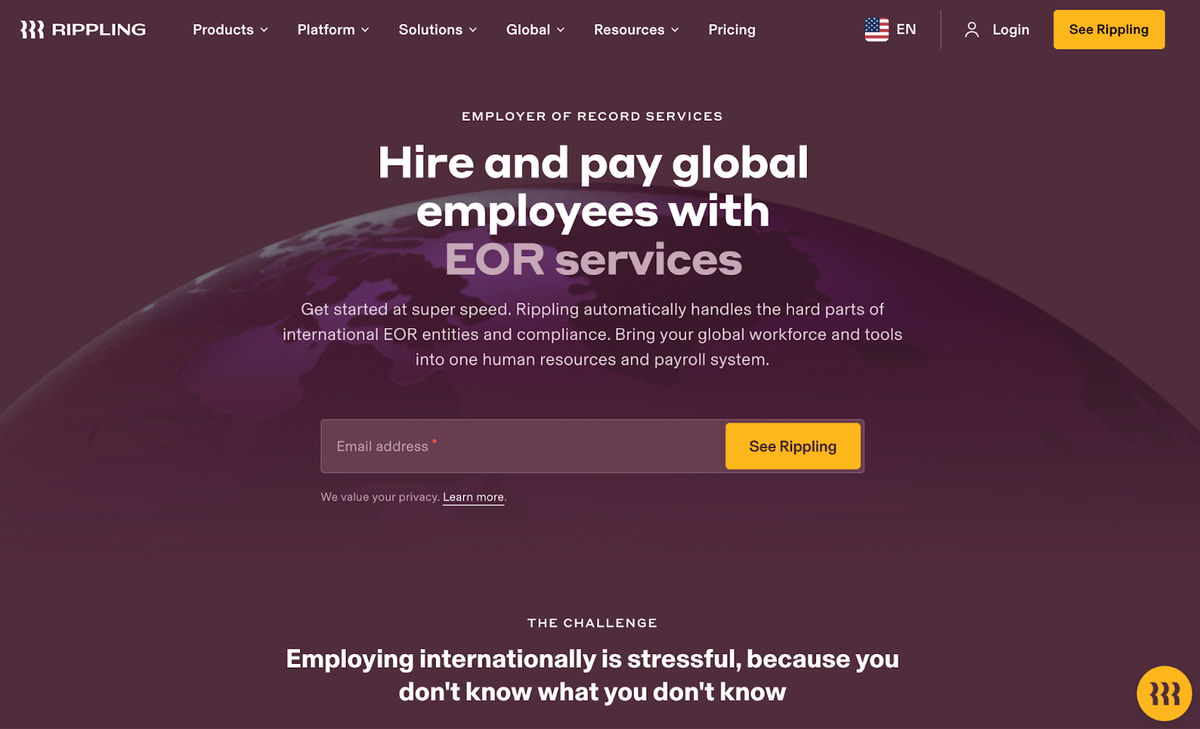
Rippling: Best for combining EOR with HRIS + IT automation

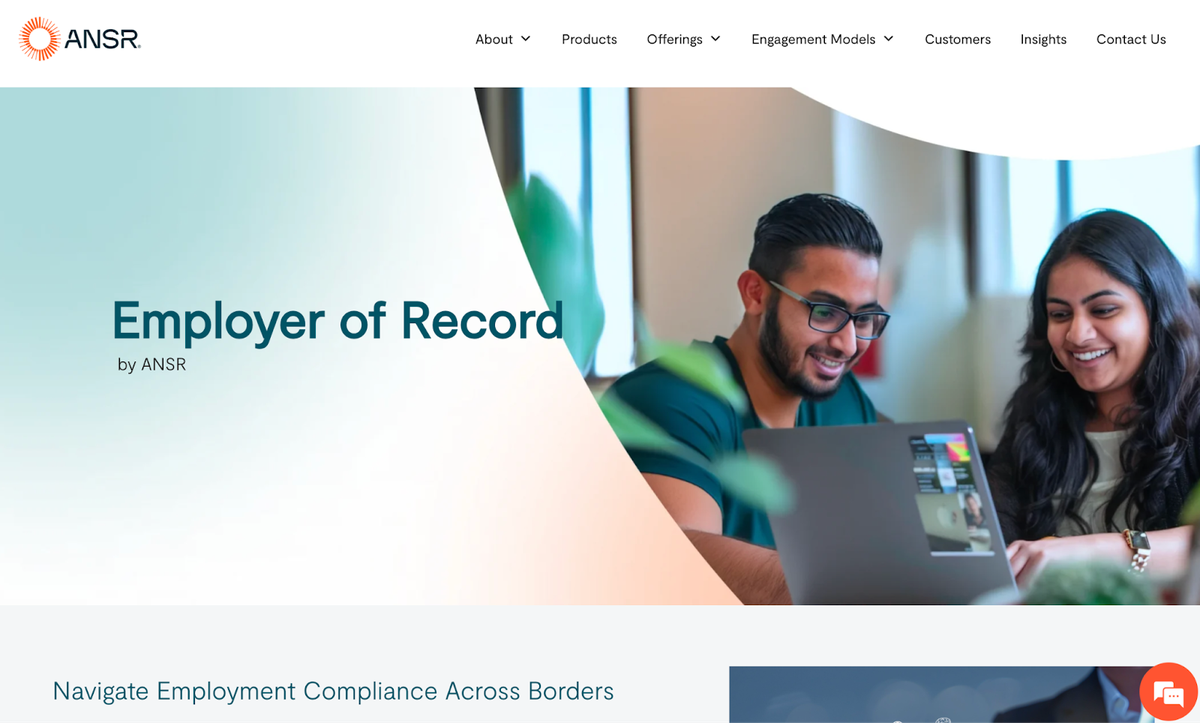
ANSR: Best for enterprises building India-based capability centers (GCCs)

Oyster HR: Best for remote-first global teams hiring in India

Skuad: Best for startups needing fast, affordable India hiring

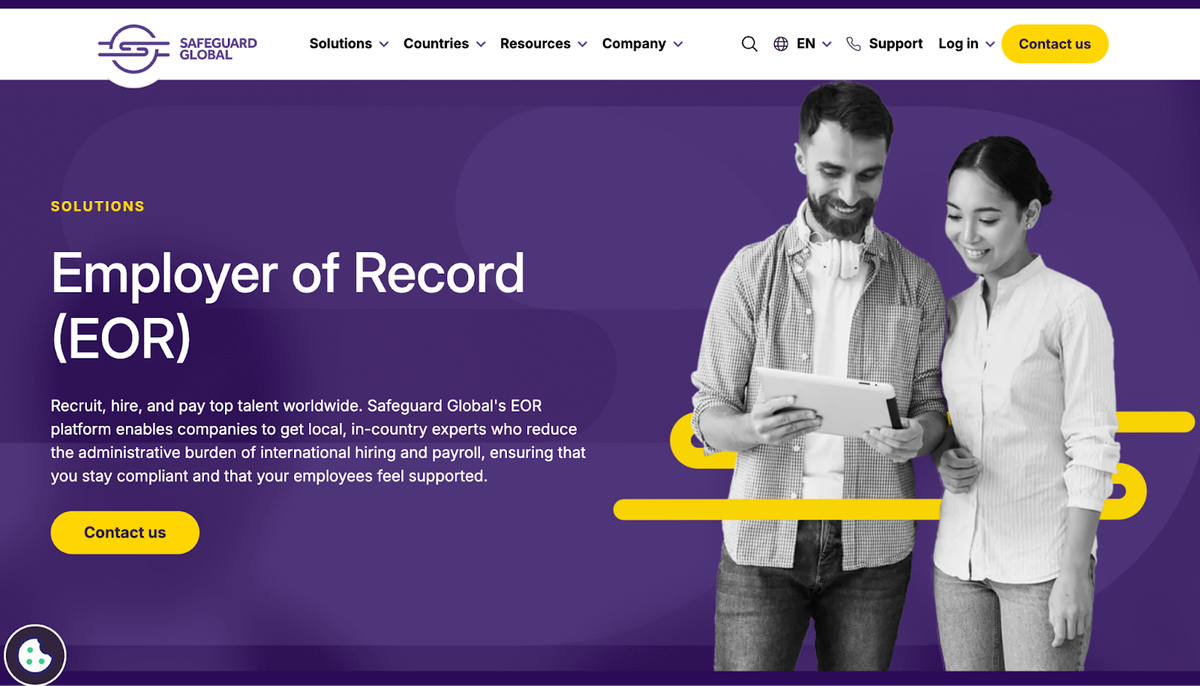
Safeguard Global: Best for flexible, enterprise-grade workforce management

Remote: Best for tech companies hiring distributed Indian teams

Multiplier: Best for SMEs wanting cost-effective India onboarding

GoGlobal: Best for compliance-focused hiring via owned India entities

Mercans: Best for enterprise payroll accuracy & statutory governance

1. Rivermate

Best for: Overall India EOR performance & reliable compliance

Key features

Rivermate operates as a dedicated India EOR with deep expertise in the country's multi-state employment landscape. The platform provides automated payroll processing that accurately calculates PF at 12% for both employee and employer contributions, handles ESI deductions for employees earning ₹21,000 or less monthly, manages TDS withholding based on income tax declarations, and processes state-specific Professional Tax where applicable.

The platform maintains comprehensive employee record-keeping systems designed for Indian labor law compliance, manages statutory benefit enrollments, processes government filings on schedule, and supports both full-time employees and fixed-term contractors.

Rivermate's contract library includes region-specific employment agreements that reflect state-level Shops and Establishments Act requirements, minimum wage regulations, and termination notice periods varying by location.

Pros

Full compliance with Indian labor laws and state variations

Accurate PF, ESI, TDS, and Professional Tax payroll handling

Fast onboarding with India-ready contracts

Local HR expertise for leave policies, notice periods, and Shops Act rules

Transparent pricing and strong customer support

Handles multi-state compliance requirements seamlessly

Cons

No IT/asset management capabilities

Not ideal for complex multinational governance setups

Pricing

€299 per employee per month

2. Rippling

Best for: Companies needing EOR + full HRIS + IT automation in India

Key features

Rippling integrates EOR services with a comprehensive human resources information system (HRIS) and IT management tools. This unified platform manages employment contracts, payroll, benefits, compliance with tax regulations, and IT infrastructure from one interface.

The system automates workflows globally while maintaining India-specific payroll accuracy. Rippling handles PF and ESI registration, generates compliant payslips with statutory deduction breakdowns, processes government contributions on time, and maintains digital record systems exceeding Indian retention requirements.

The platform also manages device provisioning, security group assignments, and access permissions, making it particularly valuable for companies coordinating hiring across multiple locations.

Pros

Unified HR, payroll, IT, and finance platform reducing tool fragmentation

Workflow automation capabilities reducing manual processing

Accurate India payroll compliance with multi-state support

Excellent user experience for distributed teams

Seamless offboarding with data security compliance

Cons

Higher starting costs compared to India-focused EORs

EOR services rely on partner entities in some countries

Complex setup process for small teams

Pricing

Custom (typically $1,000+ per month for India operations)

3. ANSR

Best for: Enterprises building India-based capability centers (GCCs)

Key features

ANSR specializes in helping multinational corporations establish and scale Global Capability Centers in India. Rather than operating as a traditional per-employee EOR, ANSR functions as a comprehensive talent solutions and employer services provider for enterprises.

The platform manages large-scale hiring campaigns, drafts employment agreements aligned with GCC requirements, handles payroll for multiple team structures, ensures compliance across India's various labor regulatory frameworks, and provides strategic workforce planning services.

ANSR's expertise extends to managing hybrid employment models, contractor arrangements, and permanent staffing arrangements within a single location or across multiple Indian cities.

Pros

Deep expertise in India Global Capability Centers (GCCs)

Strong compliance and talent acquisition solutions

Strategic workforce planning for large-scale operations

Integrated hiring and corporate setup workflows

Experience managing 100+ employee teams

Cons

Not designed for small teams (minimum headcount often required)

No transparent pricing (custom quotes only)

Consulting-heavy model rather than SaaS-driven automation

Pricing

Custom (enterprise consultation required)

4. Oyster HR

Best for: Remote-first companies hiring in India

Key features

Oyster HR prioritizes user experience and accessibility for remote teams. The platform provides intuitive self-service employee portals where team members can view payslips, track leave balances, submit documentation, and manage benefits.

Oyster creates employment contracts that meet Indian legal standards, including correct specification of notice periods, leave entitlements, salary components, and termination conditions. The system manages statutory compliance across PF, ESI, TDS, and Professional Tax requirements.

Oyster's documentation portal centralizes employee records—identity proofs, educational qualifications, tax declarations, and benefit enrollments—making audit readiness straightforward.

Pros

Easy-to-use interface improving employee engagement

Clear compliance documentation reducing employer anxiety

India-compliant contracts reflecting local labor law requirements

Strong self-service HR tools for distributed teams

Clear visibility into payroll processes

Cons

Higher pricing compared to budget-focused alternatives

Not heavily localized for state-specific compliance nuances

Onboarding slower than fastest competitors in the market

Pricing

$699 per month

5. Skuad

Best for: Startups hiring fast in India

Key features

Skuad delivers streamlined EOR services focused on rapid deployment and affordability. The platform handles essential payroll functions: calculating and remitting PF contributions, managing ESI where applicable, processing TDS deductions, and filing required statutory returns.

Skuad maintains employment contracts and employee documentation in compliance with Indian labor regulations. The platform's lightweight design reduces setup friction, enabling startups to onboard their first Indian hire quickly without navigating complex system configurations.

Pros

Very affordable pricing suitable for startup budgets

Fast onboarding enabling rapid team building

Strong PF/TDS compliance ensuring statutory accuracy

Lightweight interface reducing administrative overhead

Minimal learning curve for non-HR personnel

Cons

Limited enterprise tools for large-scale operations

Smaller platform presence meaning less market presence

Fewer integrations with other business systems

Pricing

$199 per employee per month

6. Safeguard Global

Best for: Large companies needing flexibility with "workforce-as-a-service"

Key features

Safeguard Global operates a comprehensive global employment platform that treats India as one of many markets. The provider offers "workforce-as-a-service" flexibility, allowing companies to structure teams as full-time employees, fixed-term contractors, or project-based resources.

For India specifically, Safeguard manages compliance with federal labor codes and 28 state-specific regulatory frameworks. The platform handles payroll processing in Indian Rupees, processes statutory contributions (PF employer/employee portions, ESI, TDS, Professional Tax), manages benefits including health insurance and additional coverage, and maintains compliance documentation for audit purposes.

Pros

Extremely strong compliance infrastructure

Global payroll plus EOR plus contractor support in one platform

Excellent for scaling large Indian teams

Flexible workforce-as-a-service model allowing different employment structures

Sophisticated benefits and tax planning tools

Cons

Premium pricing tier making it expensive for small teams

Complex enterprise-oriented workflows and interfaces

Not ideal for startups needing simplicity

Pricing

Custom

7. Remote

Best for: Tech and product teams scaling across India

Key features

Remote specializes in helping technology companies build distributed teams. The platform automates payroll processing, ensuring accurate calculation of all statutory deductions and timely government payment. Remote offers strong contractor support, allowing companies to engage both full-time employees and independent contractors through one system.

The platform provides access to in-country benefits options, including health insurance plans, retirement benefits, and wellness programs designed for Indian employees. Compliance management covers all major statutory requirements including PF registration, ESI administration, TDS processing, and state-specific professional tax handling.

Pros

Automated payroll and compliance reducing manual work

Strong contractor support alongside employee management

Good in-country benefit options improving employee retention

Modern user interface and clear documentation

Strong focus on distributed team needs

Cons

Expensive compared to mid-range EOR options

Some workflows can feel unnecessarily complex

Premium pricing may strain startup budgets

Pricing

$599 per month per employee

8. Multiplier

Best for: SMEs expanding across Asia & India

Key features

Multiplier serves small and medium-sized enterprises seeking cost-effective expansion across multiple Asian countries, including India. The platform automates payroll calculations ensuring accurate PF contributions (12% employer + 12% employee), TDS withholding based on income tax brackets, and ESI deductions where applicable. Multiplier's TDS and PF workflows streamline government filing and payment processes, reducing administrative burden.

The onboarding process enables fast employee activation, with documentation collection, compliance registration, and payroll setup completed efficiently.

Pros

Strong pricing offering good value for SMEs

Automated PF, TDS, ESI workflows reducing errors

Fast onboarding enabling rapid team building

Multilingual support accommodating diverse teams

Good for companies operating across Asia

Cons

Smaller market footprint than major EOR providers

Limited enterprise integrations for complex systems

Less customization for specialized compliance needs

Pricing

Approximately $400 per employee per month

9. GoGlobal

Best for: Companies wanting owned-entity EOR coverage in India

Key features

GoGlobal differentiates itself by owning local legal entities in countries where it operates, including India. Rather than partnering with local employers, GoGlobal becomes the direct legal employer on its own registered company.

This ownership structure provides stronger regulatory compliance, as the entity exists independently rather than relying on third-party arrangements. GoGlobal manages employment contracts, payroll processing, statutory contribution administration, and benefits management. The platform's focus on owned entities appeals to companies wanting maximum control over compliance and reduced dependence on external partnerships.

Pros

Owns local entities reducing regulatory risk

Good benefits administration services

Strong knowledge of India employment laws and enforcement practices

High-touch HR support and dedicated account management

Direct legal employment relationships

Cons

Premium pricing reflecting owned-entity operational costs

Smaller integration ecosystem

Less automation than tech-first platforms

Pricing

Custom (typically $700-1,200+ per employee per month)

10. Mercans

Best for: Enterprise-level Indian payroll & compliance

Key features

Mercans provides sophisticated global payroll engines designed for large multinational organizations with complex compensation structures. The platform handles accurate statutory deductions across India's federal and state requirements, including precise PF calculations, ESI administration, TDS withholding, and Professional Tax processing.

Mercans maintains enterprise-grade security systems protecting sensitive payroll and employee data. The platform's systems support audit trails, approval workflows, and documentation management meeting stringent organizational governance requirements.

Pros

Strong global payroll engine handling complex calculations

Highly accurate statutory deductions reducing compliance risk

Secure, enterprise-ready systems protecting sensitive data

Well-suited for large multinational organizations

Cons

Complex platform interface overwhelming for small teams

Premium price tier accessible mainly to large organizations

Less intuitive user experience compared to modern SaaS

Pricing

Custom (enterprise-level pricing)

How EORs simplify India’s state-by-state compliance maze

India’s employment compliance isn’t one uniform rulebook. While the central government sets broad labour frameworks, each of India’s 28 states and 8 union territories applies its own requirements and procedures, so hiring across locations quickly becomes a state-by-state compliance exercise.

This complexity shows up first in day-to-day rules under Shops and Establishments regimes. Basics like working hours, overtime, weekly rest, leave policies, and required registers can differ depending on where the employee is located, which makes “one template” risky across multiple states.

Payroll adds another layer. State levies such as Professional Tax may apply in some states and not others, and where it does apply, the slabs and rules vary—so payroll needs to be configured correctly by employee location to avoid miswithholding and filing issues.

An Employer of Record (EOR) simplifies this by embedding state-specific rules into its processes and systems. When you hire in a given state, the right policies, deductions, and documentation requirements are applied automatically, and the provider monitors regulatory updates so your team doesn’t have to track and reconfigure compliance state by state.

When using an EOR makes more sense than setting up a local entity

For foreign companies, the question isn’t whether to hire in India—it’s whether Employer of Record services or a local entity fits the way you’re entering and scaling. An EOR is usually the better choice when speed and flexibility matter: you can typically onboard in 1–4 weeks versus 8–12+ weeks for entity setup, which is useful for testing a market, hiring a small initial team (often 1–5 employees), or scaling up and down without the operational burden of running and potentially closing an entity.

EOR also makes sense when you want predictable costs and minimal upfront investment. Providers typically charge a fixed monthly fee per employee (often $99–$599, depending on the provider), while setting up an entity can require significant upfront spend (often $50k–$200k) plus ongoing fixed costs (commonly $1.5k–$5k/month) regardless of headcount.

It’s especially efficient for a global business hiring across multiple countries that wants one platform to manage payroll and compliance, or if you don’t have in-house HR/payroll expertise and would otherwise rely on local consultants.

A local entity tends to win when you’re committed to India long-term (often 3+ years) with stable growth—especially once headcount reaches scale (commonly 50+ employees), where fixed overhead can bring per-employee costs down compared to EOR fees.

It’s also the right path if you need a registered local presence for branding and partnerships, operate in regulated industries that require local licensing (e.g., financial services, telecom, healthcare), or want maximum control over operations and IP. Many companies take a hybrid approach: hire quickly via EOR while setting up the entity in parallel, then transition employees once the entity is ready (often 3–4 months).

It’s especially efficient for a global business hiring across multiple countries that wants one platform to manage payroll and compliance

Conclusion

Selecting an Employer of Record in India matters because the small details are the ones that create real risk and real frustration. Payroll accuracy, statutory deductions, payslip formatting, local registrations, and how issues are handled when something goes wrong will shape your employee experience just as much as the contract does. If India is a meaningful part of your hiring plan, you want an EOR that can get the basics right consistently and explain the tradeoffs clearly.

Providers differ in ways that are easy to miss during a demo. Some are built for speed and self-serve workflows. Others are stronger on in-country guidance and hand-holding. You will also see differences in what is included versus add-on, how transparent the pricing is, how payroll changes are handled, and how responsive support is during month-end.

In India specifically, it is worth paying attention to how they manage statutory items like PF, ESI, professional tax, gratuity considerations, and local compliance under Shops and Establishments, plus what their process looks like for exceptions and corrections.

Rivermate is the strongest option when India is a priority market and you want India-specific support with clear pricing and a practical, hands-on approach. It is a particularly good fit if you want to move quickly, keep the process simple for your team, and avoid surprises around what is included and how compliance is handled in practice.

Before choosing, compare a shortlist side by side and pressure-test with real scenarios. Ask how long onboarding takes in your target state, what the monthly payroll timeline looks like, how they handle reimbursements and variable pay, what happens if an employee changes details mid-cycle, and how quickly support responds when something needs fixing. The goal is not to pick the “biggest” name. It is to pick the partner that matches your timeline, headcount plans, and the level of guidance you actually need for India.

For more information on Indian payroll, taxes, and benefits, please see our Employer of Record India guide.

FAQs

Can an EOR sponsor employment visas for foreign employees working in India?

Yes—because the EOR is the legal employer of record, many providers can support or initiate the Employment Visa process and related onboarding steps, though requirements vary by nationality and visa category. Certain visa categories require a minimum salary threshold (commonly cited at USD 25,000/year).

After arrival, foreign nationals typically must register with the FRRO within 14 days, which an EOR can help coordinate as part of onboarding. In some cases (e.g., certain ECR-country situations), additional accreditation steps with Indian missions may be needed before hiring can proceed.

How quickly can I hire an employee in India using an EOR?

Best-case onboarding can be 2–7 days, but a more typical range is 1–4 weeks depending on background checks and how fast documents are collected. The flow is usually: sign the EOR agreement, issue the contract/offer, collect KYC/tax details, then complete payroll/benefits registrations. The biggest time driver is often payroll setup and registrations (e.g., PF/ESI/tax and any state-specific steps). Compared to a local entity setup (~8–12+ weeks), an EOR is usually much faster for immediate hiring.

Do I still manage my employee's work if they are legally employed by an EOR?

Yes—you manage the employee’s day-to-day work exactly as you would with a direct hire. The EOR handles the legal employment layer (contracting, payroll management, statutory compliance, HR documentation), while you handle performance, projects, schedules, and deliverables. You still decide who to hire, the role scope, and the salary/comp structure (the EOR administers it through compliant payroll). This split keeps control of work with you and compliance with the EOR.

What employment costs should international companies expect when hiring in India?

Plan for salary + statutory employer costs + benefits + the EOR fee. Statutory employer contributions often add roughly 20–25% on top of base pay (e.g., PF; ESI may apply depending on salary thresholds; plus state Professional Tax where relevant). EOR fees commonly run ~$99–$600 per employee/month, depending on provider and service scope. A quick rule of thumb: budget ~1.2x–1.35x base salary before the EOR fee, then add the monthly EOR cost and any enhanced benefits.

What’s the difference between an EOR and a professional employer organization (PEO)?

A professional employer organization (PEO) typically requires your company to have a local entity and then co-employs workers to support HR administration. An EOR, by contrast, can hire workers on your behalf without a local entity, making it a more practical solution for international hiring when you want faster setup and stronger risk mitigation, and simpler compliance management.

Does an EOR reduce risk for employers?

Yes, an EOR supports compliance and risk mitigation by keeping employment documentation, payroll processing, and statutory reporting aligned with local regulations. This reduces the likelihood of penalties, misclassification issues, or disputes that can arise when hiring under complex labor laws without in-country support.

Social Share:

Rivermate | background
Lucas Botzen

Founder & Managing Director

Lucas Botzen is the founder of Rivermate, a global HR platform specializing in international payroll, compliance, and benefits management for remote companies. He previously co-founded and successfully exited Boloo, scaling it to over €2 million in annual revenue. Lucas is passionate about technology, automation, and remote work, advocating for innovative digital solutions that streamline global employment.

Rivermate | background
Team member

Hire your global team with confidence

Our Employer of Record (EOR) solution makes it easy to hire, pay, and manage global employees.

Book a demo
Best EOR Services in India: Comparison Guide | Rivermate