





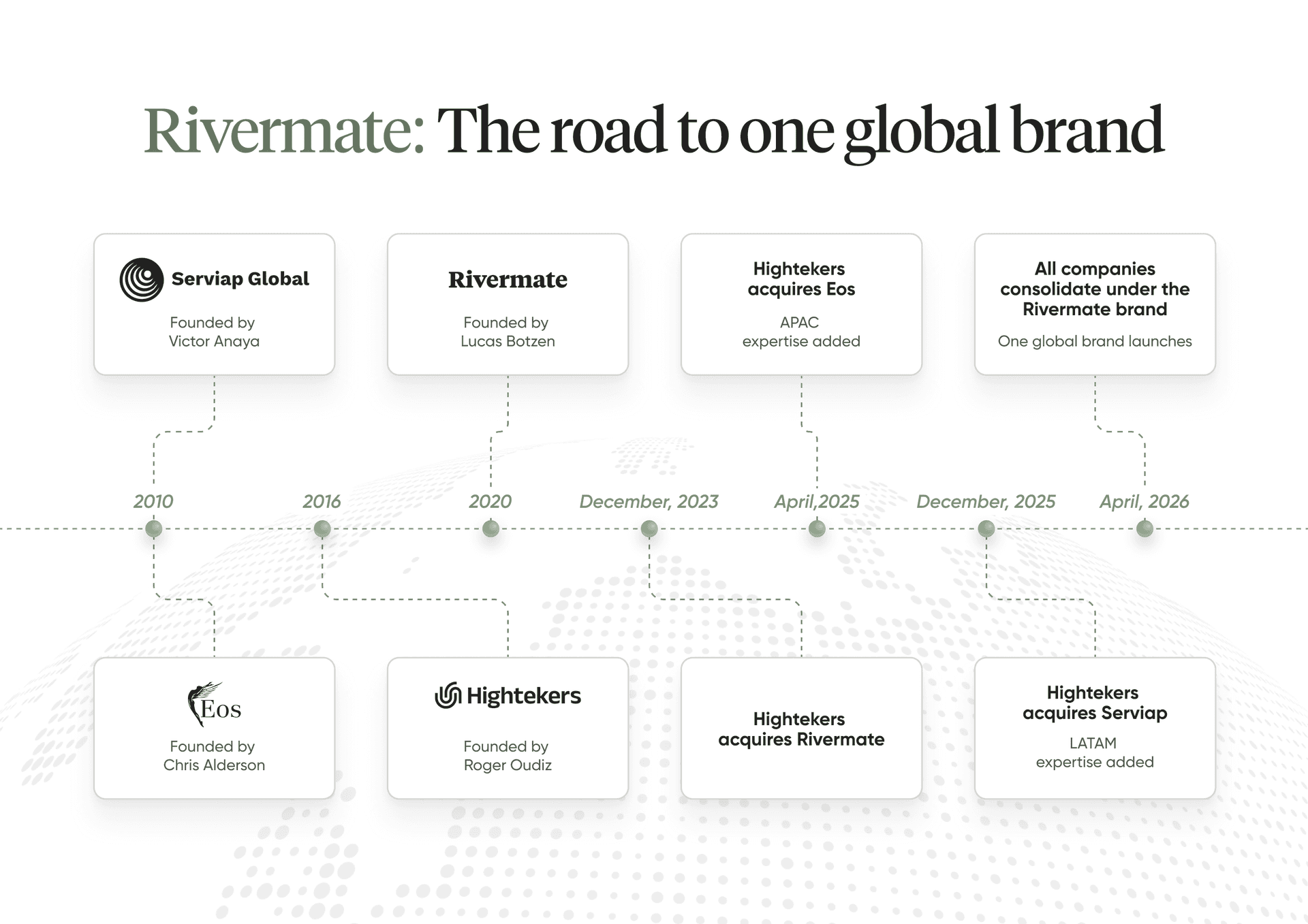
Big newsEos, Serviap, and Hightekers EOR are now Rivermate.Read more
Rivermate logo

Global Employment Guides

17 mins read

What Is a PEO? The Complete Guide to Professional Employer Organizations

Published on:

Jun 30, 2026

Updated on:

Jun 30, 2026

Rivermate | What Is a PEO? The Complete Guide to Professional Employer Organizations

What Is a PEO? The Complete Guide to Professional Employer Organizations

Expanding into new markets creates new opportunities, but it also brings new responsibilities. As businesses hire across multiple jurisdictions, managing payroll, HR, employee benefits, and employment compliance becomes increasingly complex. Whether you're a growing startup building your first international team or an established company entering new markets, keeping up with local employment requirements can quickly consume valuable time and resources.

A Professional Employer Organization (PEO) helps businesses simplify these responsibilities by managing many of the administrative tasks associated with employing people. By partnering with a PEO, companies can outsource functions such as payroll, HR administration, compliance, and employee support, allowing internal teams to focus on business growth instead of day-to-day employment administration.

If you've started researching PEOs, you've probably also come across terms such as Employer of Record (EOR), Global PEO, or even Global Employment Organization (GEO). One of the biggest challenges is that these terms are not always used consistently. Depending on the country, a PEO may describe a specific co-employment arrangement, while in other markets, the same term may be used to describe what is more accurately an Employer of Record service.

This guide explains what a PEO is, how it works, the services it provides, and how it differs from an Employer of Record. It also explores when a PEO is the right choice for your business and what to consider when selecting a provider. Whether you're hiring domestically or planning an international expansion, understanding these distinctions will help you choose the employment solution that best fits your needs.

What Is a PEO?

A Professional Employer Organization (PEO) is a company that provides outsourced human resources and employment administration services to other businesses. Depending on the employment model and the jurisdiction, a PEO may manage payroll, employee benefits, tax administration, HR support, compliance, workers' compensation, and other employer responsibilities. This allows businesses to reduce the time spent on administrative work while maintaining focus on their operations and long-term objectives.

The exact role of a PEO depends on where your business operates.

In countries where the traditional PEO model is well established, particularly in the United States, a PEO typically operates through a co-employment arrangement. Under this model, the client company retains responsibility for directing employees, managing performance, setting compensation, and making business decisions, while the PEO assumes responsibility for many administrative employment functions, including payroll processing, benefits administration, employment tax reporting, and HR compliance.

Internationally, however, the terminology is often different. In many regions, particularly throughout Asia-Pacific and other global markets, the term Global PEO has become widely used to describe an employment solution that enables companies to hire employees in countries where they do not have a legal entity. In practice, these services are generally delivered through an Employer of Record (EOR) model, where the provider becomes the legal employer while the client company continues to direct the employee's day-to-day work.

As a result, businesses researching international hiring frequently encounter both terms used interchangeably. Understanding the context behind each definition is essential when evaluating providers and determining which solution best fits your expansion plans.

Terminology varies by country

Depending on where you operate, you may encounter terms such as Professional Employer Organization (PEO), Global PEO, Employer of Record (EOR), or even Global Employment Organization (GEO). While these terms are sometimes used interchangeably, they can refer to different employment models depending on the jurisdiction. In many international markets, Global PEO is commonly used to describe Employer of Record (EOR) services, while in countries such as the United States, a PEO often refers to a co-employment arrangement. Throughout this guide, we'll explain these differences and where the terminology overlaps.

PEO vs. Global PEO vs. Employer of Record

Although these terms are closely related, they are not always synonymous. The table below highlights the distinctions you'll most commonly encounter.

Feature PEO (Co-employment Model) Global PEO / Employer of Record (EOR)
Primary employment model Co-employment between the client company and the PEO The provider serves as the legal employer on behalf of the client
Does the client usually need a local legal entity? Generally yes, although requirements vary by jurisdiction No
Payroll administration
Employee benefits administration
HR support and employee administration
Employment compliance
Best suited for Companies with an established local entity seeking HR and employment administration support Companies hiring employees in countries where they do not have a legal entity
Common terminology Frequently used in markets such as the United States In many international markets, "Global PEO" commonly refers to Employer of Record services

It's important to remember that these distinctions are not universal. Employment law varies significantly between jurisdictions, and providers may use different terminology depending on the markets they serve. Rather than focusing solely on the label, businesses should evaluate how a provider delivers its services, who becomes the legal employer, and whether the solution supports their hiring strategy and compliance requirements.

How Does a PEO Work?

A PEO enables businesses to delegate employment administration to specialists while retaining control over their workforce.

In a co-employment arrangement, the client company continues to recruit employees, define job responsibilities, manage performance, approve compensation, and oversee day-to-day operations. Meanwhile, the PEO assumes responsibility for many administrative employer obligations, including payroll processing, employment tax administration, employee benefits, HR documentation, regulatory reporting, and other compliance-related functions.

When services are delivered through an Employer of Record model, the structure differs slightly. Instead of sharing employer responsibilities, the provider becomes the legal employer in the country where the employee is hired. This allows businesses to employ talent in jurisdictions where they have not established their own legal entity while continuing to direct the employee's work, responsibilities, and performance.

Although the legal relationship differs between these models, the business outcome is often similar. Companies gain access to HR expertise, local compliance knowledge, and streamlined employment administration without having to build extensive internal HR capabilities or navigate unfamiliar employment regulations on their own.

For growing businesses, this partnership can significantly reduce the time and resources required to hire, onboard, and support employees, particularly when expanding into new markets with complex employment laws or administrative requirements.

What Services Does a PEO Provide?

One of the biggest advantages of working with a PEO is that it brings together many of the employment functions businesses would otherwise have to manage separately. Instead of coordinating payroll providers, HR consultants, benefits brokers, legal advisors, and compliance specialists, companies can work with a single partner that manages much of the employment lifecycle.

The exact scope of services varies by provider and jurisdiction, but most PEOs support businesses across payroll, HR administration, compliance, employee benefits, and workforce management. For companies entering new markets or growing rapidly, this integrated approach simplifies employment management while helping reduce compliance risks.

Payroll Processing and Tax Administration

Payroll is one of the most common reasons businesses partner with a PEO. Once a company begins hiring across multiple jurisdictions, payroll becomes far more than simply paying employees on time. Every country has its own tax rules, statutory contributions, reporting obligations, leave requirements, and payroll schedules.

A PEO manages these responsibilities on behalf of its clients, including salary calculations, tax withholding, statutory contributions, overtime, bonuses, expense reimbursements, payroll reporting, and other country-specific requirements. This helps businesses maintain accurate payroll while reducing the need to coordinate multiple local payroll providers.

Hiring Across Borders

For businesses expanding internationally, hiring employees in another country involves much more than finding the right candidate. Every jurisdiction has its own employment laws, payroll requirements, tax obligations, statutory benefits, and onboarding processes, making cross-border hiring significantly more complex than domestic recruitment.

Depending on the employment model and the countries involved, a PEO can help businesses navigate these requirements by providing local HR expertise and employment support. In many international markets, Global PEO services are delivered through an Employer of Record (EOR) model, allowing companies to hire employees compliantly in countries where they do not have a legal entity. This enables businesses to access global talent more quickly while reducing the operational complexity of international hiring.

Employee Benefits Administration

Offering competitive employee benefits can help businesses attract and retain talent, but administering those benefits often requires ongoing coordination with insurers, retirement providers, and government agencies.

Many PEOs manage benefits administration on behalf of their clients, overseeing enrollment, renewals, policy administration, and employee communications. Depending on the market, some providers may also negotiate more competitive benefit packages by leveraging the combined size of their client workforce. Beyond simplifying administration, this helps businesses provide a more consistent employee experience while meeting local statutory benefit requirements.

HR Administration Throughout the Employee Lifecycle

Managing employees extends well beyond recruitment and onboarding. Throughout the employment relationship, businesses must prepare contracts, maintain employee records, administer leave, update HR documentation, implement workplace policies, and manage offboarding when an employee leaves.

A PEO helps coordinate many of these responsibilities, giving internal HR teams more time to focus on employee engagement, workforce planning, and business priorities. For growing companies without dedicated HR specialists in every location, this support can be especially valuable.

Employment Compliance

Employment legislation is constantly evolving. Governments regularly introduce changes to labor laws, tax regulations, minimum wage requirements, statutory leave, reporting obligations, and workplace protections. Keeping up with these developments across multiple jurisdictions can be challenging, particularly for businesses expanding internationally.

A PEO helps businesses navigate this changing regulatory landscape by monitoring legislative developments and supporting compliance with local employment requirements, while also helping businesses interpret how internationally recognized principles, apply alongside local legal requirements. While no provider can eliminate every compliance risk, working with specialists who understand local laws can significantly reduce the likelihood of avoidable compliance issues and administrative penalties.

Risk Management

Employment-related risks extend beyond legal compliance. Workplace policies, disciplinary procedures, employee disputes, documentation standards, and termination processes all require careful handling to reduce legal and operational risk.

Many PEOs provide guidance on HR best practices and employee relations while helping businesses establish clear employment processes before issues arise. Some providers also assist with workers' compensation administration, occupational health requirements, or employment-related insurance, depending on the jurisdiction and services offered.

HR Technology and Reporting

Many PEOs complement their services with HR technology that centralizes employment administration. Depending on the provider, businesses may have access to employee self-service portals, payroll reporting, leave management, digital document storage, onboarding workflows, and workforce analytics.

Rather than relying on disconnected systems or manual processes, companies can manage many routine HR functions through a single platform while maintaining accurate employment records and improving visibility across their workforce.

Why Businesses Choose a PEO

While individual services such as payroll or benefits administration provide immediate value, businesses typically partner with a PEO for a broader reason: to simplify employment management as they grow.

As organizations expand into new markets or hire across multiple jurisdictions, employment administration becomes increasingly difficult to manage internally. Payroll, compliance, employee benefits, and HR operations all become more complex, often requiring local expertise that businesses may not have in-house.

A PEO brings these responsibilities together under one provider, helping businesses build and support their workforce more efficiently while maintaining confidence that critical employment functions are being managed consistently and in line with local requirements.

When Should a Business Use a PEO?

Not every company needs a PEO, and deciding whether to partner with one depends on your business goals, internal resources, and hiring strategy. For some organizations, building an in-house HR function makes sense. For others, outsourcing employment administration offers greater flexibility, particularly during periods of growth or expansion.

A PEO is often a good fit for businesses that want to spend less time managing payroll, compliance, and HR administration while ensuring employees continue to receive a professional and compliant employment experience. Rather than replacing an internal HR team, a PEO typically complements it by taking on operational responsibilities that would otherwise require significant time and specialized expertise.

Businesses commonly consider working with a PEO when they are:

  • Expanding into new domestic or international markets.
  • Growing their workforce faster than their internal HR team can support.
  • Looking to improve payroll accuracy and simplify HR administration.
  • Navigating unfamiliar employment laws or compliance requirements.
  • Seeking more competitive employee benefits or more efficient benefits administration.
  • Hiring employees in locations where they have limited local HR expertise.

Startups and small to medium-sized businesses often use PEOs to access HR capabilities that would otherwise require building a larger internal team. Larger organizations also partner with PEOs when entering new markets, supporting regional hiring, or supplementing existing HR operations with local expertise.

Ultimately, the decision is less about company size than operational complexity. As workforces become more geographically distributed, managing employment across different jurisdictions requires specialized knowledge that many businesses choose to outsource.

Using a PEO for International Expansion

International expansion creates opportunities for growth, but it also introduces a new set of employment and compliance challenges. Every country has its own labor laws, payroll requirements, tax obligations, statutory benefits, notice periods, and employment documentation. Practices that are standard in one jurisdiction may not satisfy legal requirements in another.

One of the first questions businesses ask when hiring internationally is whether they need to establish a local legal entity before employing workers. The answer depends on the employment model.

In jurisdictions where a co-employment PEO model is used, businesses generally need their own legal entity because they remain one of the employing parties. However, many international providers deliver their services through an Employer of Record model, allowing companies to hire employees without first establishing a local entity.

This is one reason the term Global PEO has become so widely used. In many parts of the world, businesses use it to describe international employment solutions regardless of the underlying legal structure. In practice, these services are frequently delivered through an Employer of Record arrangement, enabling organizations to expand into new markets while relying on local experts to manage employment compliance.

For companies exploring international hiring, the terminology matters less than understanding how the service works. Before choosing a provider, businesses should consider questions such as:

  • Who will be the employee's legal employer?
  • Is a local legal entity required?
  • Who is responsible for payroll and tax administration?
  • How are statutory benefits managed?
  • What support is provided for employment compliance?
  • Can the solution scale as the business expands into additional countries?

Answering these questions early helps businesses choose an employment model that supports both their immediate hiring needs and their long-term growth plans.

How to Choose the Right PEO

Not all PEO providers offer the same services, geographic coverage, or level of support. Choosing the right partner means looking beyond marketing claims and evaluating how well a provider can support your business today and as it grows.

One of the first considerations is geographic expertise. If your business plans to hire internationally, it's important to confirm that the provider has experience in the countries where you intend to operate. Local employment laws, payroll practices, statutory benefits, and compliance requirements vary significantly from one jurisdiction to another, making regional expertise just as important as global reach.

Businesses should also consider the scope of services offered. While some providers focus primarily on payroll processing, others provide more comprehensive support across onboarding, HR administration, benefits management, compliance, employee documentation, and ongoing workforce support. Understanding exactly what is included helps prevent unexpected gaps as your workforce expands.

Technology is another important consideration. A modern employment platform should make routine HR tasks easier for both administrators and employees by providing secure access to payroll information, employment documents, leave management, and reporting tools. At the same time, technology should complement, not replace, experienced local professionals who can provide guidance when employment questions arise.

Scalability is equally important. A provider that meets your needs today should also be able to support future growth, whether that means hiring additional employees, expanding into new countries, or adapting to changing workforce requirements. Changing providers in the middle of an expansion can create unnecessary disruption, making it worthwhile to choose a long-term partner from the outset.

Finally, look for transparency. A reputable PEO should clearly explain its employment model, define the responsibilities of each party, and provide straightforward information about compliance, pricing, and service delivery. Clear expectations at the beginning of the relationship help build trust and reduce misunderstandings as your workforce grows.

Frequently Asked Questions

Is a PEO the same as an Employer of Record?

It depends on the country and the employment model being used.

In markets such as the United States, a PEO typically refers to a co-employment arrangement in which the client company and the PEO share employer responsibilities. In many international markets, however, the term Global PEO is commonly used to describe services delivered through an Employer of Record model, where the provider becomes the legal employer on behalf of the client.

Because terminology differs between jurisdictions, businesses should focus on how the provider delivers its services rather than relying solely on the name of the solution.

Does a PEO help with international hiring?

Yes, although the structure depends on the provider and the countries involved.

Many companies offering international hiring solutions operate through an Employer of Record model, allowing businesses to employ workers in countries where they do not have their own legal entity. In many parts of the world, these services are commonly marketed as Global PEO services.

Can startups benefit from a PEO?

Absolutely. Startups often have limited HR resources but still need to manage payroll, employment contracts, compliance, onboarding, and employee administration. Partnering with a PEO gives founders and leadership teams access to experienced HR support without having to build a large internal HR function from day one.

What industries use PEO services?

PEOs support businesses across a wide range of industries, including technology, financial services, healthcare, manufacturing, retail, professional services, and consulting. Any organization looking to simplify employment administration or support workforce growth can benefit from partnering with a PEO.

How much does a PEO cost?

Pricing varies depending on the provider, the countries involved, the number of employees, and the services required. Some providers charge a fixed monthly fee per employee, while others use percentage-based pricing or customized enterprise agreements. When comparing providers, businesses should evaluate pricing alongside expertise, geographic coverage, and the quality of support rather than focusing solely on cost.

Final Thoughts

As businesses grow, so do the responsibilities that come with employing people. Managing payroll, HR, employee benefits, and employment compliance across multiple jurisdictions requires time, expertise, and a thorough understanding of local employment requirements. A PEO helps simplify these responsibilities by providing the support and local knowledge businesses need to manage their workforce more effectively.

While the meaning of PEO varies across jurisdictions, the underlying goal remains the same: helping businesses employ and support their workforce with confidence. Whether through a co-employment arrangement or an Employer of Record model, the right provider allows companies to spend less time managing employment administration and more time growing their business.

For organizations with international ambitions, understanding the differences between PEOs, Global PEOs, and Employer of Record services is an important first step. Choosing the right partner means looking beyond terminology and evaluating the expertise, geographic coverage, and level of support needed to build and manage a global workforce successfully.

Rivermate helps businesses hire, manage, and support employees in more than 180 countries through compliant global employment solutions. Whether you're expanding into a single new market or building an international workforce across multiple jurisdictions, our team can help simplify global employment so you can focus on growing your business.

Social Share:

Rivermate | background
Polina Rudneva

Head of Partnerships

Polina owns and builds Rivermate's global partner network across the EOR ecosystem. Her work centers on identifying the right in-country partners, establishing strong commercial frameworks, and ensuring partnerships deliver in practice. She works closely with local providers and internal teams to improve how Rivermate delivers onboarding, payroll, and ongoing support across markets, with a focus on identifying gaps and resolving operational friction. Polina takes a hands-on, pragmatic approach, remaining deeply involved in negotiations, partner performance, and day-to-day collaboration. Her goal is to build reliable, long-term partnerships that directly improve the client experience and support the company's international growth.

Rivermate | background
Team member

Hire your global team with confidence

Our Employer of Record (EOR) solution makes it easy to hire, pay, and manage global employees.

Book a demo