




Key takeaways
-
Spain offers a highly educated and multilingual workforce, attracting international businesses.
-
Strict employment laws, regional variations, and mandatory collective bargaining agreements make compliance challenging.
-
Employer of Record (EOR) services help companies hire in Spain without setting up a local entity.
-
Top EOR providers differ in pricing, features, and ideal use cases.
-
Costs typically range from €299 to €700 per employee per month.
Spain has been one of the most promising markets for businesses, especially for international businesses. Its workforce consists of a highly educated and multilingual talent pool. They have competitive positioning in both Europe and Latin America.
But when you think of expanding your operations in Spain, it can be complex because of its very strict employment framework. Spain’s hiring landscape can be defined by mandatory collective bargaining agreements, complicated tax and social security rules that differ by region and industry, and protective labor frameworks.
Spain’s workforce framework adds significant challenges, which is why there is a justification to use specialized Employer of Record services. Requirements can be overwhelming for international businesses that lack local expertise, making these services critical to ensuring that expansion is both compliant and risk-controlled.
This guide compares the Top 10 Employer of Record in Spain for 2026, detailing their key features, pricing, and ideal applications:
10 Best Employers of Record in Spain: 2026 Overview
| Rank |
EOR Provider |
Best For |
Starting Price (Approx.) |
| 1 |
Rivermate |
Overall best EOR for hiring in Spain |
From €299/month |
| 2 |
Velocity Global |
Big enterprises expanding into Europe |
Custom |
| 3 |
Skuad |
Quick and cost-effective hiring for smaller global teams |
From €350/month |
| 4 |
Omnipresent |
Fully remote teams that require strong HR compliance |
Custom |
| 5 |
Deel |
Fast onboarding and integrated global payroll |
From €499/month |
| 6 |
IberiaEOR |
Regional experts with deep expertise in Spanish HR |
Custom |
| 7 |
Papaya Global |
EOR solutions for enterprises with automation and data insights |
Custom |
| 8 |
Remote |
Tech companies hiring distributed talent across Spain |
From €599/month |
| 9 |
Native Teams |
Freelancers and SMEs requiring simple compliance |
From €199/month |
| 10 |
Safeguard Global |
Multinational firms looking for enterprise-level support |
Custom |
Note: Although all listed providers operate EOR services in Spain, the regulations governing third-party employment can be complex. Be sure to confirm each provider’s compliance status and contractual structure before moving forward.
Rivermate - Best overall EOR in Spain

What is Rivermate?
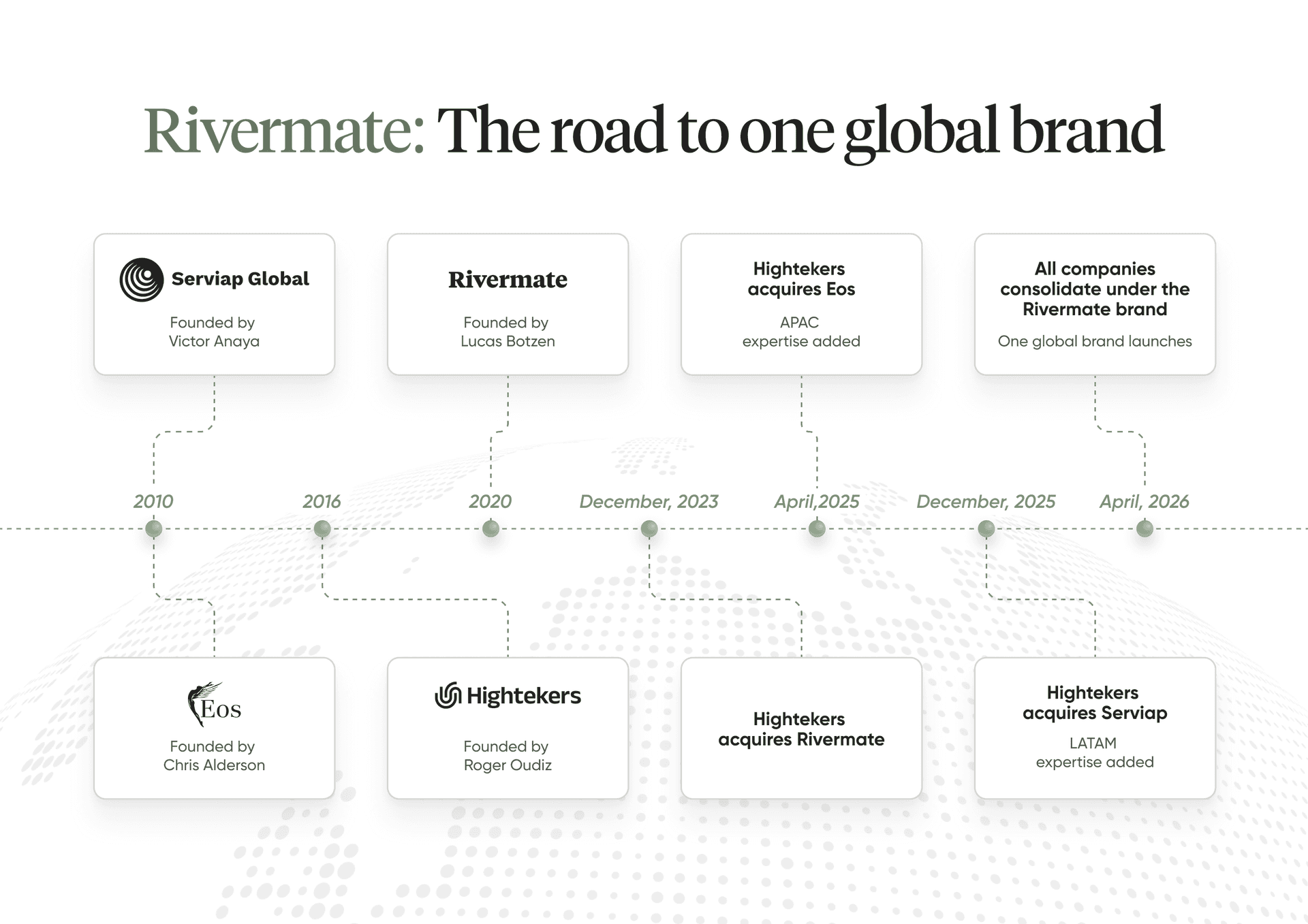
Rivermate is an Employer of Record platform that steps in as the official employer in Spain for companies that don’t have a local setup. They handle the required employment paperwork—contracts, payroll, and the social security filings that Spanish law expects. The company hiring the person still decides the work and manages the role, while Rivermate makes sure the employment is arranged correctly under local rules.
Key features
Simplified payroll management
Rivermate oversees the payroll process for employees based in Spain, handling the calculations and mandatory deductions and making sure the required filings reach the authorities on time. The team keeps track of changes in Spanish payroll rules so pay runs remain accurate without clients needing to monitor those updates themselves.
Comprehensive benefits administration
They manage the typical benefits expected in the Spanish market, including health coverage, pension-related contributions, and required social security contributions. Rivermate also oversees the enrollment and ongoing administration that comes with these employee benefits.
Compliance and risk reduction
Spanish employment rules don’t always follow a single pattern. Different roles and sectors have their own obligations, so Rivermate reviews each hire individually. They look at the contract terms, how pay is arranged, and what formal steps apply when someone joins or leaves. The point is simply to prevent avoidable issues by checking the details that often get missed.
Dedicated support and account management
Each client is assigned a main contact who stays familiar with the account and can respond to questions as they arise. Support is available through multiple channels, and the team assists with both routine matters and unexpected situations tied to local employment requirements.
Flexible setup
The service can be shaped around different hiring plans, whether it involves a single role or several positions. Rivermate can also assist with identifying candidates when requested, which is useful for companies starting a presence in Spain or adding to an existing team.
Pros
-
Helps reduce legal and administrative risk.
-
Ensures alignment with Spanish labor and tax requirements.
-
Removes the burden of employment administration.
-
Provides attentive, ongoing support.
-
Allows companies to hire in Spain without opening a local entity.
Cons
-
Pricing is not listed publicly and requires a custom quote.
-
Some legal nuances in Spain still require careful navigation, even with an EOR.
-
May be less cost-effective for very small hiring needs.
Pricing
Fees are determined per employee each month and depend on the size of the team and the level of support needed. Exact amounts are shared once Rivermate has reviewed the client’s requirements.
Customer support
Each client works with a main contact who stays familiar with the account and follows the employment matters tied to it. Support can be reached through several methods, and the team helps resolve questions or issues that come up as the employment relationship progresses.
Best for
Rivermate is suited for teams that want to hire in Spain without forming a local entity and prefer reliable guidance on Spanish compliance along with steady operational support.
Velocity Global - Best for enterprises looking for global expansion
What is Velocity Global?
Velocity Global is an Employer of Record platform designed to support business hiring and managing employees without a local entity being established. With their focus on enterprise clients, they provide a solution by combining local expertise with technology.
Key features
-
Global hiring in 185+ countries
-
Multi-currency payroll processing
-
End-to-end compliance management
Pros
Cons
Pricing: Custom
Customer support: Support via multiple channels
Best for: Enterprises with broad global growth needs
Skuad - Best for fast and affordable hiring for small global teams
What is Skuad?
Skuad is an Employer of Record platform that allows companies to hire, onboard, and issue payments to their employees and contractors in one dashboard, ensuring compliance with each country’s local labor laws.
Key features
-
Can manage contractors and full-time employees in one platform
-
End-to-end employee management
-
Offers smooth employee onboarding
Pros
Cons
Pricing: Custom
Customer support: Email and help center support
Best for: Fast and budget-friendly hiring for global teams
Omnipresent - Best for remote teams that depend on strong HR compliance

What is Omnipresent?
Omnipresent is a global employment platform that is an expert in the European market and local legal entities, which also offer workflow automations, compliance management, and HR integrations.
Key features
-
Automated workflows for operations
-
Integration with 20+ HR systems
-
Dedicated account management
Pros
Cons
Pricing: Custom
Customer support: Dedicated account managers
Best for: Companies that want to focus on European market expansion
Deel - Best for scalable and transparent global hiring
What is Deel?
Deel is a global workforce platform providing modular service categories that help companies manage hiring, payroll, and support employees and contractors.
Key features
-
Local tax compliance management
-
Automated payroll with streamlined onboarding workflow
-
Visa application assistance
Pros
Cons
Pricing: €499/month
Customer support: Live chat support, phone and email
Best for: Companies building global teams with mixed employment structures
IberiaEOR - Best for Spain-focused expansion

What is IberiaEOR?
IberiaEOR is a dedicated Employer of Record provider catering to businesses that are looking to expand in the Spanish market. They have 14 locations in Spain that provide expertise and end-to-end workforce solutions.
Key features
Pros
-
In-depth experts in Spanish market
-
Very competitive pricing structure
-
Smooth and transparent workflows
Cons
Pricing: Approximately €299 monthly
Customer support: Contact through direct inquiry
Best for: Companies focused on hiring in Spain
Papaya Global - Best for AI-powered payroll optimization
What is Papaya Global?
Papaya Global is a cloud-based Employer of Record provider that serves companies with its comprehensive workforce solution integrated with AI-powered automation.
Key features
Pros
Cons
Pricing: Custom
Customer support: Dedicated client support
Best for: Mid-sized to large companies investing in AI-powered automation
Remote - Best for IP protection and owned legal entities
What is Remote?
Remote is an Employer of Record platform that enables companies to hire and manage employees while ensuring strong IP protection by operating through owned entities in each country.
Key features
-
Offers industry-leading IP safeguards
-
Extensive HR capabilities
-
Real-time compliance monitoring across regions
Pros
Cons
-
Integration limitations
-
Complex initial setup
Pricing: From €599/month
Customer support: AI-powered support for common inquiries
Best for: Businesses that require strong security and compliance control
Native Teams - Best for cost-effective global payments and compliance
What is Native Teams?
Native Teams is an all-in-one Employer of Record platform that simplifies work for international businesses and remote workers. They combine traditional workforce solutions with comprehensive payment management via digital wallets and finance management tools.
Key features
-
Global payroll supporting local currency payments
-
Legally compliant and locally adapted employment contracts
-
Comprehensive expense management
Pros
Cons
Pricing: From €199 per month
Customer support: Support in multiple languages
Best for: Budget-conscious companies looking for affordable EOR services
Safeguard Global - Best for enterprise growth and expansion

What is Safeguard Global?
Safeguard Global is a trusted Employer of Record platform and global HR payroll provider that delivers complete employment solutions that combine advanced technology and strong local expertise.
Key features
-
Comprehensive workforce solutions
-
GDPR and SOC1-compliant HR platform
-
Advanced workforce and people analytics
Pros
Cons
Pricing: Custom
Customer support: Support designed for enterprise clients
Best for: Enterprise complexity and permanent entity setup
EOR vs. Setting up a local entity: Which one is right for your business?
Hiring people in Spain can feel complicated if you’re doing it for the first time, especially because the rules are more protective than in many other European countries. This is one of the reasons companies often lean on an Employer of Record (EOR).
When you hire through an EOR, they become the official employer on paper. That means they take care of payroll, taxes, compliance, and all the administrative jobs nobody really wants to worry about. You still decide what the employee works on, how they perform, and how they fit into your team. The EOR simply carries the legal weight so you don’t have to set up your own company in Spain right away.
Some businesses prefer to use an EOR when they’re just “testing the waters”; maybe you want to hire one or two people in Spain before committing to the cost and responsibility of opening a local entity. Others eventually choose to set up their own company once they know they’re staying for the long run and want full control over HR and compliance. Both routes work; it really depends on how deeply you plan to invest in the market.
Understanding Spanish employment law
Spanish employment rules can feel a bit heavy when you’re first dealing with them, mostly because different pieces of the system overlap. One thing that really shapes how companies operate is the Convenio Colectivo. Every industry or workplace has one, and it’s basically the agreement that sets out the practical stuff people care about: how much someone earns, what the usual hours look like, how overtime works, and so on. Most employers end up leaning on the Convenio more than the general law because it’s clearer and more in tune with how the job actually works.
When it comes to contracts in Spain, you don’t actually use the full menu of options that the law lists. Most of the time it boils down to the regular long-term contract, the one without an end date, because that’s what the authorities expect for any ongoing role.
Temporary contracts still exist, but they really only make sense when someone’s covering for a colleague on leave or there’s a short project you know won’t last. People who are still learning the job usually get a training-style contract that ties what they do to whatever qualifications they’re working toward. And internships are their own thing: short, supervised, and mostly about giving students or recent grads a foot in the door.
Spain technically has one national system, but the experience changes a bit once you’re dealing with people in different regions. Holidays are the clearest example—each area adds its own dates, so your team in one city might be off while another office is open like normal.
Work habits can shift too. In a lot of places, especially when it gets hot, companies switch to a morning-only schedule and everyone goes home early. And then there’s time tracking, which Spain now wants done digitally everywhere. The only catch is that the total number of hours you need to account for still depends on the collective agreement for your sector, so you can’t just assume the same rule applies to every role.
For more information on Spanish payroll, taxes and benefits, please see our Employer of Record Spain guide.
Conclusion
If you’re trying to decide between using an EOR or creating your own entity in Spain, it really comes down to what stage your business is at and how much you’re ready to commit. An EOR is the easier way to get started, you can hire quickly, explore the market, or run short projects without setting up a full legal presence. It keeps things simple while you figure out whether Spain is somewhere you want to invest more heavily.
Once you know you’re in it for the long run, a local entity tends to make more sense. It gives you more control, usually works out cheaper over time, and lets you build out your own policies and structure. A lot of companies actually combine both approaches: they begin with an EOR to get moving fast and, once the team grows and the market proves itself, they shift to their own entity. It’s a practical way to stay flexible early on but still build toward something more permanent when the timing is right.
FAQs
Do I need a Spanish legal entity to hire in Spain?
Not always. Plenty of companies hire people there without opening a full entity, but you still need some kind of structure that keeps you compliant with Spain’s rules. It’s less about the entity itself and more about making sure the employment setup is handled properly.
Are EOR services legal in Spain?
They exist, but the rules are strict. Spanish law doesn’t like the idea of one company being the “legal” employer while another directs the day-to-day work. If it isn’t structured properly, it can be treated as an illegal worker assignment, which comes with serious fines and back-pay issues. It’s important to use a provider that actually understands the Spanish system.
Do I still manage my team if I use an EOR?
Yes. You run the work, set expectations, and manage performance. The EOR just takes care of the admin and compliance side.
How much does an EOR cost in Spain?
Most providers fall somewhere between €299 and €700 per employee each month, depending on what’s included. Some charge a flat fee, others use a percentage of salary.