



Employee Benefits and Well Being
How Long is Maternity Leave in the US
How long is maternity leave in the US? Learn the legal minimums, paid vs unpaid leave, state differences, and employer obligations for new parents.
Lucas Botzen
Employee Benefits and Well Being
9 mins read


Our Employer of Record (EOR) solution makes it easy to hire, pay, and manage global employees.
Book a demoMaternity leave in the US lacks a single national standard, relying instead on federal, state, and employer policies. There is no federally mandated paid maternity leave, but eligible workers can access up to 12 weeks of unpaid maternity leave, job-protected leave under the Family and Medical Leave Act (FMLA).
Alt text: “Parent bonding with a newborn during maternity leave in the US.”

There is no federal law in the US that requires employers to offer paid maternity leave.
What the law provides is job security in some cases. Eligible employees can take up to 12 weeks off after giving birth and go back to the same job under the Family Medical Leave Act (FMLA). This leave is unpaid, and plenty of workers are not covered because of employer size or their tenure in the company.
Paid maternity leave is usually from state programs or from employers directly. Many of the states do not give paid family leave or short-term disability benefits, but some do. Employer policies also vary widely, even within the same industry.
Maternity leave in the US differs depending on where you live and who you work for.
Alt text: “Planning maternity leave timeline in the United States.”

The Family and Medical Leave Act (FMLA) is a U.S. federal law that allows eligible employees to take time off work for certain family and medical reasons, which include pregnancy, childbirth, and bonding with a new baby. It gives up to 12 weeks of leave within a 12-month period; however, the leave is unpaid. Employees may be able to use accrued paid time off at the same time, but it depends on their employer’s policy.
The main benefit of FMLA is job protection, meaning employees are entitled to return to the same or an equivalent role after their leave. Their group health insurance also continues even while they are away. FMLA is actually designed to protect an employee’s job rather than replace their income.
Several states offer paid leave beyond FMLA. Here's a summary table for key states:
| State | Length of Leave | Paid or Unpaid | Key Notes |
|---|---|---|---|
| California | 12 weeks (4 SDI + 8 PFL) | Paid | Up to $1,620/week |
| Colorado | 12 weeks (+12 NICU) | Paid | FAMLI; up to 24 weeks total possible |
| New York | 12 weeks PFL (+26 DBL) | Paid | Up to 38 weeks combined; $1,177 max |
| New Jersey | 12 weeks | Paid | Partial wage replacement |
| Massachusetts | 20 weeks combined | Paid | PFML; 12 weeks bonding |
| Washington | 14 weeks (12 + 2 preg) | Paid | $1,456 max |
| Rhode Island | 36 weeks combined | Paid | TCI program |
| Connecticut | 12 weeks | Paid | PFML program |
| Oregon | 14 weeks | Paid | +2 pregnancy weeks |
| District of Columbia | 12 weeks | Paid | $1,118 max |
| All Other States | 0-12 weeks FMLA only | Unpaid | Employer-dependent |
Alt text: “States with paid family and medical leave programs.”
Paid maternity leaves mean you receive continuous income while you are not working, which is usually a portion of the salary you normally receive. Unpaid maternity leave allows you to take time off without pay unless you choose to use your vacation leave or other paid leave benefits.
Many states in the US offer paid leave programs, such as Paid Family and Medical Leave (PFML), which provides the employee with partial wage replacement during medical recovery or bonding time. Some employers also offer paid parental leave as a part of their benefits package.
It is also common for these employee benefits to be combined. One example, new mothers might first use short-term disability during recovery and then move to paid family leave for8 weeks bonding, and then later on use paid time off to extend her leave. Remember that these programs often replace only part of your income, and some of the benefits may overlap rather than run one after the other.
Many employers offer parental leave benefits that go beyond FMLA requirements.
While there is no universal standard for this, common employer patterns include:
What a company may offer is shaped by various factors, including industry norms, employee expectations, talent competition, and whether the employer operates in states with paid family leave programs, which can help offset the cost of providing the paid time off.
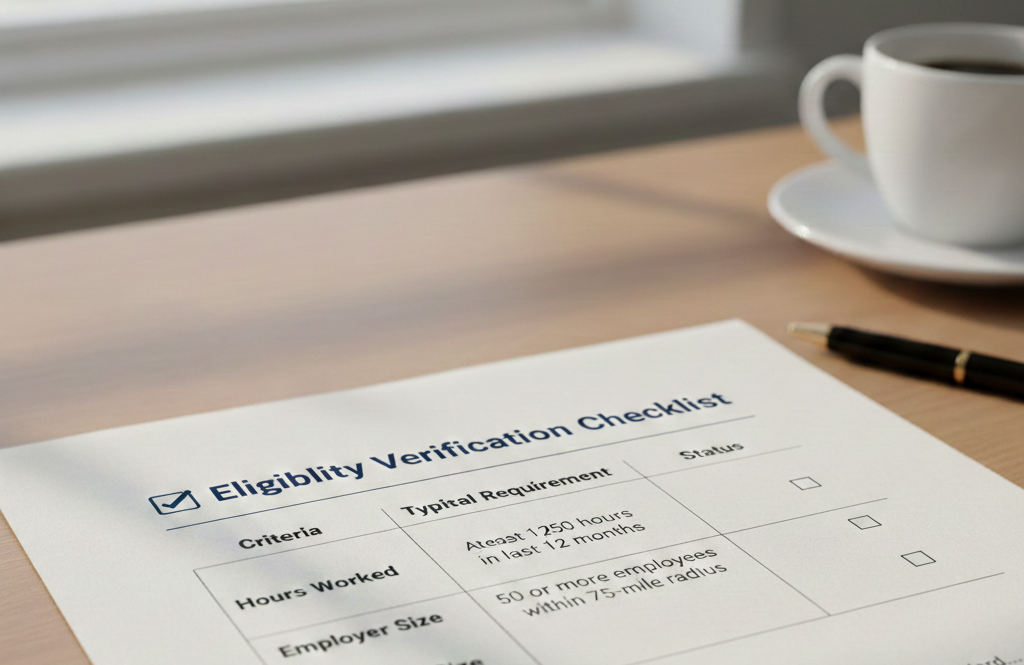
Eligibility depends on what kind of leave you are using, and these rules are not the same across the board.
FMLA is applicable if the employer is large enough and the employee has worked there long enough. They will likely not be qualified if the company is small or if they are a newer employee, even if they are having a baby.
State programs work differently. They usually look at the employee's earnings report and sometimes hours worked, rather than employer size. That is the reason why part-timers can still qualify in other states, as long as they meet the minimum earnings requirements.
This is where things differ the most. Some employers offer paid parental leave from day one, while others require a minimum tenure before these benefits apply. Policies also differ for birth or adoption, foster replacement, and non-birthing parents, so it is very important to check all the details.
One thing people often miss is that even when the FMLA does not apply, other laws can still protect you. Federal and state anti-discrimination rules may apply during pregnancy, and some laws require reasonable accommodations for pregnancy-related limitations.
For a broader overview of time-off rules in the US, see Rivermate’s US leave guide.
Alt text: “Maternity leave eligibility checklist.”

For employers, maternity leave compliance is not all about following a single rule. It becomes more complex once their team is distributed across different states. Being eligible can change based on where an employee works and pays taxes, and not where the company is primarily located.
State leave programs, federal FMLA requirements and employer-provided benefits are not always in sync, and they often overlap. Coordinating what runs concurrently, what is paid or not, and how benefits continue during leave requires careful tracking and clear internal processes.
That difficulty increases even more for international companies hiring in the US. Without the help of a local HR or legal presence navigating federal and state leave laws, these can expose employers to gaps in compliance, employee experiences inconsistencies, and unnecessary compliance risks.
Managing payroll, benefits continuation, and documentation across multiple jurisdictions adds another layer of difficulty to this. In these cases, working with an Employer of Record like Rivermate can help bring structure and consistency by managing compliance, benefits coordination, and leave administration across states.
Maternity leave in the US isn’t defined by one national policy. Most employees begin with the federal baseline of up to 12 weeks of unpaid, job-protected FMLA leave, then rely on state programs and employer benefits for pay. Because eligibility and wage replacements differ widely, the most accurate answer remains this: it depends on where you work, who employs you, and what benefits are available.
If you need help navigating US leave rules across states or creating compliant leave policies for your team, Rivermate can support you in hiring and managing US employees compliantly.
How long is paid maternity leave in the US?
There is no single national length for paid maternity leave in the US. Paid time off depends on state paid leave programs or employer benefits.
Is maternity leave mandatory for employers in the US?
Paid maternity leave is not mandatory at the federal level. Many employers must provide unpaid family leave or job-protected leave under FMLA if they meet coverage and eligibility requirements.
Can I take maternity leave if I don’t qualify for FMLA?
Yes, you can still be able to take maternity leave even without FMLA coverage. State paid leave, state pregnancy protections, employer parental leave, PTO, or short-term disability can still provide time off or income replacement.
How does maternity leave work for remote or international employees in the US?
Maternity leave for remote workers based in the US usually depends on the state where the employee works and pays tax, plus the employer’s policy. Most companies hiring in the US often need to coordinate FMLA, state programs, and benefits administration carefully to stay compliant.

Lucas Botzen is the founder of Rivermate, a global HR platform specializing in international payroll, compliance, and benefits management for remote companies. He previously co-founded and successfully exited Boloo, scaling it to over €2 million in annual revenue. Lucas is passionate about technology, automation, and remote work, advocating for innovative digital solutions that streamline global employment.


Our Employer of Record (EOR) solution makes it easy to hire, pay, and manage global employees.
Book a demo
Employee Benefits and Well Being
How long is maternity leave in the US? Learn the legal minimums, paid vs unpaid leave, state differences, and employer obligations for new parents.
Lucas Botzen

Global Employment Guides
Compare the best EOR services in Spain for global expansion. Find trusted providers offering payroll, HR, and compliance support for Spanish teams.
Lucas Botzen

International Employment Laws
Considering moving to Vietnam for work? Discover essential information on work visas and permits to help you get started.
Vladana Donevski