






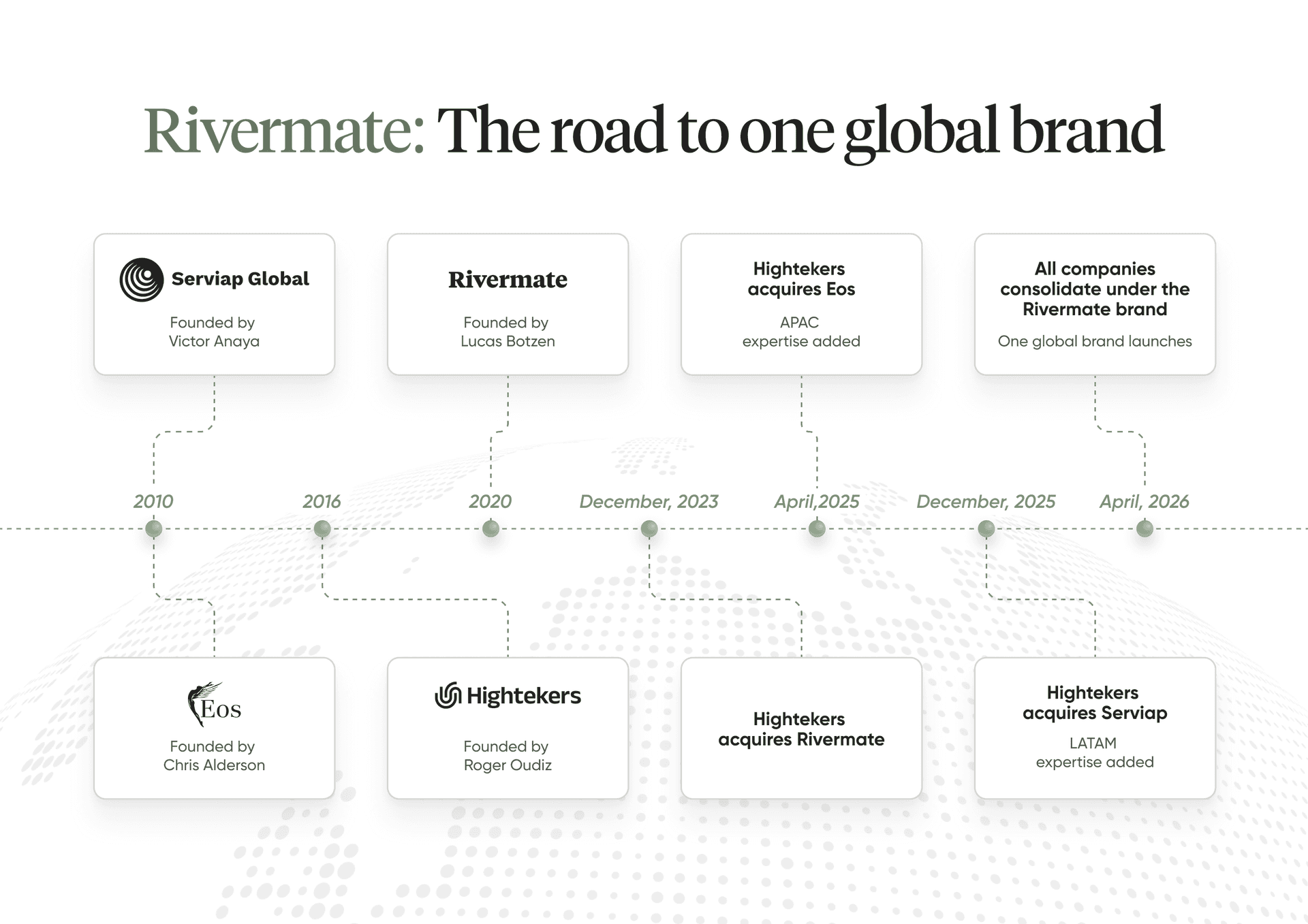
Big newsEos, Serviap, and Hightekers EOR are now Rivermate.Read more
Rivermate logo

Global Employment Guides

14 mins read

Employer of Record vs traditional hiring: Which is best for global expansion?

Published on:

May 14, 2026

Updated on:

May 14, 2026

Rivermate | Employer of Record vs traditional hiring: Which is best for global expansion?

Here is the situation that plays out more often than it should. A company decides to hire in a new country, picks a model, and six months later realizes they picked the wrong one.

Not because the model itself was bad, but because it did not fit what they were actually trying to do. The team that went through an Employer of Record now wants more control over HR processes than the arrangement allows. The team that went the traditional route is still waiting on entity registration, while the candidate they wanted has moved on.

Getting this decision right up front saves a lot of pain. The Employer of Record vs traditional hiring question is not really about which model is objectively better. It is about which one fits your headcount, your timeline, your risk tolerance, and how much of the local compliance work you are genuinely equipped to own.

What is an Employer of Record?

An Employer of Record is a third party organization that legally employs workers on behalf of a client company in a country where that client has no legal entity. The EOR becomes the legal employer on paper. It signs employment contracts with the employee, handles tax filings, manages payroll management and statutory deductions, and keeps everything aligned with local labor laws. The client company stays in charge of what the employee actually does day to day.

What surprises some people is how much the EOR takes on behind the scenes. The legal entity, the HR infrastructure, benefits administration, social security contributions, health insurance where it is legally required, and benefits management across local laws, all of that sits with the EOR. The client company is not just outsourcing admin. They are outsourcing the entire legal employment infrastructure for that country.

That matters most for companies that are moving quickly. If you need to hire employees in a market where you have no existing footprint and no appetite for the administrative burdens and cost of establishing legal entities from scratch, an EOR gets you there faster than any other route.

Employment law is stubbornly local, which is the other thing worth understanding. The local employment laws that apply to hiring in Germany are genuinely different in structure and philosophy from those in Brazil, the Philippines, or Canada. An EOR carries that expertise across multiple countries so the client company does not have to build it internally or retain local counsel in every market separately. What compliant employment looks like by country varies in ways that are not always obvious until something goes wrong.

How the co-employment model works

The mechanics of the co-employment model are fairly straightforward in practice. You find the candidate, agree on compensation and role, and hand off to the EOR. They draft an employment contract that meets local legal requirements, onboard the employee under their own local entity, and run payroll in local currency. You reimburse the total cost of employment plus a service fee.

Where confusion tends to come in is around the distinction between an EOR and a professional employer organization. A PEO works within your existing local entity, sharing HR functions with your team while you remain the legal employer. An EOR replaces the need for that entity entirely. Staffing agencies are different again: they fill roles on a temporary basis and retain the employment relationship themselves, rather than supporting your direct and ongoing employment relationship with the worker.

When companies use EOR services

The honest answer is that EOR services work best in a fairly specific set of circumstances. Companies that want to hire employees quickly in international markets where they have no entity. Companies testing whether a new market justifies a longer-term investment before they commit to the cost and complexity of managing payroll systems and building local compliance infrastructure. Companies whose HR team is already stretched and cannot reasonably absorb the administrative complexity of maintaining compliance across multiple countries at once.

For international employees in foreign markets, the EOR removes a genuine operational headache. Local taxes, local regulations and employment administration, all of it is handled. The HR team can stay focused on core business functions and performance management instead of getting drawn into local statutory compliance questions they were not hired to answer.

There is a version of this that does not work well, though. If you are planning significant long-term headcount in a market and you want HR support that reflects your own company culture and HR processes rather than a standardized framework, an EOR will start to feel limiting faster than you expect. That is not a flaw in the model. It is just not what the model was designed for.

What is traditional hiring?

Traditional hiring means your company is the legal employer directly. You set up a local legal entity, register for local taxes and payroll, appoint directors or local representatives where the law requires it, and take on full responsibility for employment contracts, statutory benefits, tax filings, and every legal employment obligation that comes with employing people in that country. There is no intermediary. The employment relationship sits entirely within your own framework.

The HR team has to either build genuine in-house expertise in local labor regulations for each market or rely on local partners in each jurisdiction to manage hr processes and employment administration. Neither is cheap at the start. Building expertise takes time. Local partners add cost. And if you expand into several markets in parallel, you are doing this simultaneously in each one.

What you get in return is control. Direct employment gives you complete ownership of how employment is structured: contracts, termination processes, benefit design, all of it. The decisions are yours, and there is no third party organization to coordinate with when something needs to change quickly.

When traditional hiring makes strategic sense

There is a reasonably clear threshold where traditional hiring starts making more financial and operational sense than an EOR, and it usually comes down to headcount and time horizon. If you are planning 50 or more permanent employees in a single market over the next few years, the fixed costs of running a local entity tend to look better than the cumulative EOR fees over that same period. The business strategy has to support it, though. You need genuine long-term commitment to the market, not just a headcount projection.

It also makes sense when your industry requires a direct legal presence for compliance reasons, or when your employment terms need customization that goes beyond what a standard EOR framework supports. And for companies with an established HR infrastructure and a capable HR team, direct employment gives far more room to shape how HR operates in each market, how employee benefits are designed, and how the day-to-day employment administration reflects the company's own culture rather than a third party's default approach.

Key differences: Employer of Record vs traditional hiring

This is where the two models diverge most sharply. Under traditional hiring, your company owns all of it: local labor laws, withholding taxes, statutory benefits, tax filings and employment laws as they change over time. When local regulations shift in a market your HR team is not actively monitoring, the legal risk lands on you. That is manageable when you have the right expertise in place. It is genuinely risky when you do not.

An EOR carries those compliance responsibilities on your behalf. Maintaining compliance with legal requirements across every market they operate in is the entire basis of their business model. It is not a side function.

For a useful reference on employment contracts across jurisdictions, the ILO maintains authoritative guidance that is worth reviewing when you are assessing compliance risks in unfamiliar markets.

Speed of international hiring

Establishing a legal entity can take anywhere from four weeks to six months, depending on the country, and that is before payroll registration, tax registrations, and all the practical setup that follows. An EOR already has the local entity and the compliance infrastructure in place. Most can complete the hiring process and get a new employee started within two to three weeks of you identifying the candidate.

For global hiring in competitive markets where global talent moves fast, that gap matters. A two-week onboarding timeline versus a four-month one is not a minor convenience difference. It is the difference between landing the person you want and losing them to someone who could move faster.

Global hiring through an EOR is particularly effective for full time employees in markets where you have no existing HR support structure and no realistic plan to build one quickly. There is nothing to set up on your end. The employee can start.

Cost structure and operational overhead

The cost structure comparison is straightforward on the surface and messier in practice. EOR fees are visible: a flat monthly fee or a percentage of salary per employee. Traditional hiring has lower per-employee costs once an entity is up and running, but the costs of getting there, legal fees, entity registration, local accounting and audit, payroll management setup and local HR management are consistently underestimated by companies that have not done it before.

The general rule of thumb is that EOR services tend to make more financial sense when you are hiring fewer than ten to fifteen employees in a single market. Beyond that, maintaining your own entity starts to compare favorably. But the calculation has to include the full cost of compliance and ongoing employment administration, not just the initial registration fee.

Control over employees and processes

In both models, you retain full operational control of the employee's work. Their tasks, their output, their day-to-day direction, performance management, all of that is yours, regardless of which structure you use. What differs is administrative control.

Under an EOR, you do not own the employment contract directly. You are not managing payroll systems yourself. The flexibility you have over employment terms is constrained by what the EOR's framework supports. For most companies, particularly at smaller headcounts in markets where they are still establishing themselves, this does not create real friction. It starts to matter more when you want to fully manage HR, build your own HR processes in a market, or create an employee benefits structure that reflects your company's specific approach rather than a standardized one.

Companies that want to build a dedicated HR support function in a market, with their own HR team, their own approach to benefits administration, and full direct control over how employment is managed, will outgrow an EOR faster than companies that are simply looking for a compliant way to hire.

Scalability across multiple countries

If global expansion across many markets simultaneously is the goal, the comparison shifts clearly toward EOR. Managing separate legal entities across multiple countries generates substantial administrative complexity, HR infrastructure overhead, and local compliance demands that multiply with each new market. An EOR with coverage across 180 or more countries lets you hire in new markets without rebuilding that infrastructure from scratch each time.

For companies running an active international expansion strategy, the operational leverage of an EOR is significant. You are not managing local entities in ten countries. You are working through one provider with one relationship.

How to choose between an EOR and traditional hiring

The decision narrows quickly when you ask the right questions. How fast do you need to get someone started? If it is weeks rather than months, traditional hiring is not a realistic option. How many people are you actually planning to hire in this market over the next two years? Under ten to fifteen, EOR economics are hard to beat. Does your team have the compliance expertise to manage local labor laws in this specific jurisdiction, or would you be building that from scratch? And honestly, is this a market you are testing or one you are committed to?

These are not trick questions. They are the ones that determine which model fits. An EOR is not always the right answer, and traditional hiring is not the default for serious companies. It depends on the numbers, the timeline, and the operational reality of your HR team.

Testing a new market for the first time? An EOR is lower risk and meaningfully faster. Building a permanent operation with substantial headcount over a three to five year horizon? Traditional employment starts to look like the more sensible long-term structure, even accounting for the upfront investment.

The hybrid approach

The cleanest version of this is not an either/or choice at all. Many mid-sized companies run EOR for global hiring in markets where they are establishing a presence, managing small teams, or still working out whether the market justifies more. They operate their own entities in the two or three countries where they have real scale and long-term commitment. Each part of the business gets the model that fits it.

This is worth planning deliberately rather than arriving at by accident. If you are already working through an EOR and starting to see signs that direct employment might make more sense, what typically drives that transition for companies at your stage is a useful reference point before you make the call.

Which option is better for global growth?

For companies in active international expansion, an Employer of Record is the faster and lower-risk route to international hiring. The compliance responsibilities sit with a provider whose business depends on getting them right. The hiring process is weeks. The cost structure is clear and predictable upfront.

Traditional employment is the better long-term model when you are building a genuine, permanent operation in a market: direct control over the employment relationship, full ownership of core business operations locally, and economics that make more sense at real scale.

The framing that tends to be most useful is this: an EOR helps you move quickly and manage compliance risks while you are still figuring out what your international hiring capability actually looks like. You migrate to your own entity in the markets where headcount and commitment justify it. These models are not in competition with each other, and the best international expansion strategies use them in combination.

Conclusion

The Employer of Record vs traditional hiring decision comes down to legal compliance, operational capacity, and timeline. An EOR shifts legal employment obligations to a provider with genuine local expertise and removes the need to establish local entities in every market you enter. Traditional hiring gives you full ownership of the employment relationship and better economics at scale, but it requires the organizational investment to support it and the HR team capable of managing it.

Rivermate works with mid-sized companies to build international hiring structures that fit their actual growth stage, not a generic template. If you are working through this decision for one or more markets, the specifics matter more than the general principles.

Book a free consultation to work through your situation before committing to a path.

FAQs

What is the difference between an Employer of Record and traditional hiring?

An Employer of Record legally employs workers on behalf of a client company, handling payroll, tax compliance, and statutory benefits while the client company directs the employee's day-to-day work. Traditional hiring means your company is the direct legal employer, managing all employment administration through its own local legal entity in each country where you operate.

Is an Employer of Record cheaper than setting up a local entity?

For smaller headcounts, generally yes. EOR services cut out entity setup costs and the ongoing administrative complexity of maintaining local compliance infrastructure. The cost structure shifts as headcount grows. Once you are hiring ten or more employees in a single market, a local entity can start to compare more favorably, but only if you are accounting for the full cost of HR management and ongoing compliance, not just the registration fee.

When should a company use an Employer of Record?

When speed matters, when you are entering a market where compliance complexity is high, when you are testing a new market before committing to a local entity, or when you need to hire employees across multiple countries without building parallel HR infrastructure in each one. It is also the practical choice for companies that do not have in-house expertise in the local labor laws of the markets they are entering.

Can employees hired through an EOR work full-time for a company?

Yes. The EOR is the legal employer for compliance and payroll purposes, but the employee works full-time under the client company's direction. The client company manages their work, sets their objectives, and handles performance management. The EOR manages employment contracts, payroll, and local compliance requirements in the background.

Social Share:

Rivermate | background
Karl van der Weert

Head of Account Management

Karl leads the Customer Success team at Rivermate, overseeing all existing client relationships with a focus on delivering a smooth and highly personal EOR experience. Over the past two years, he has managed onboarding, payroll, and ongoing support, working closely with clients to resolve issues quickly and transparently. He coordinates with internal teams and local partners to ensure compliant, efficient EOR solutions, while identifying opportunities to support client growth. His role combines hands-on problem solving with strategic account management, with the goal of building strong, long-term client partnerships.

Rivermate | background
Team member

Hire your global team with confidence

Our Employer of Record (EOR) solution makes it easy to hire, pay, and manage global employees.

Book a demo
Employer of Record vs Traditional Hiring: Which Is Best for Global Expansion?