


Lucas Botzen
Founder, Head of Growth
Last updated:
May 28, 2026
What is an Employer of Record in Andorra?
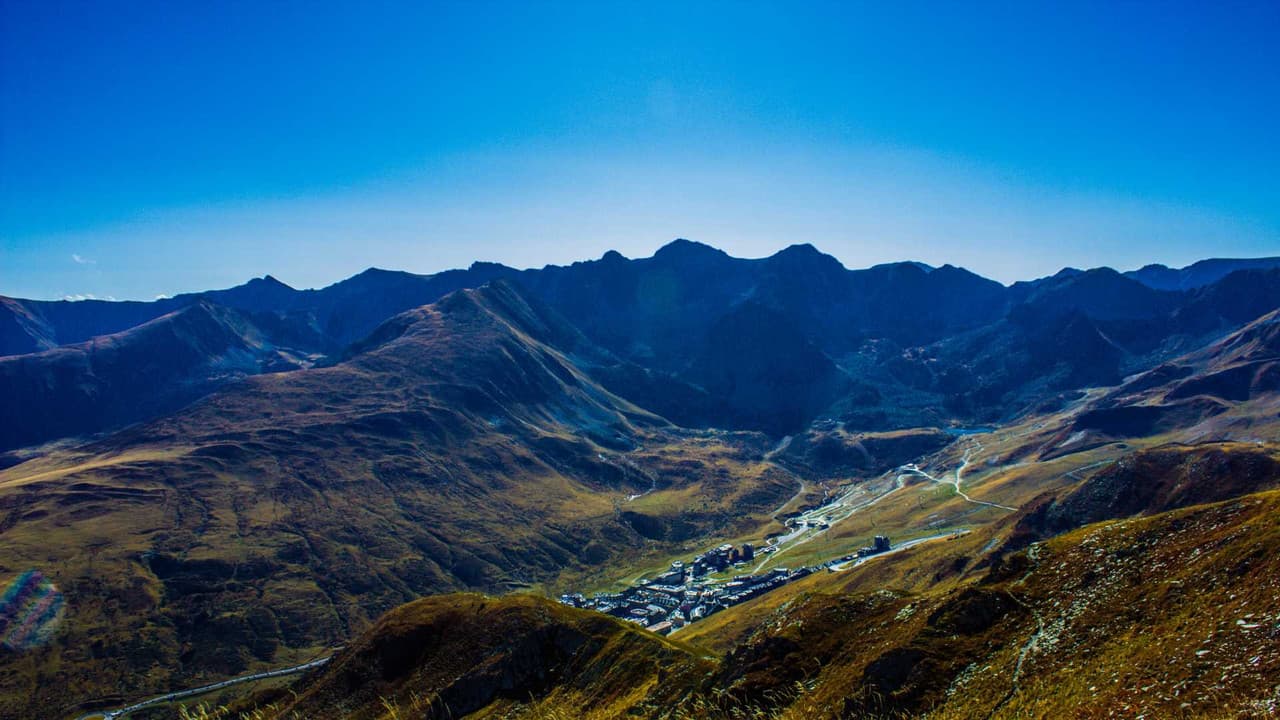
View our Employer of Record servicesAndorra, a landlocked country in Southeastern Europe, is bordered by France to the north and Spain to the south. Its economy relies mainly on tourism, retail and wealth management, but government diversification measures have expanded into ecommerce and digital services. Andorra is also investing heavily in e-sports and gaming to attract tech startups and digital tournaments.
Local talent in Andorra is concentrated mainly in the tourism and wealth management sectors, located in and around the capital city, Andorra la Vella. The working population accounts for more than 70% of the total, and the majority of workers are between 30 and 50 years old, creating a small but experienced talent pool.
Popular roles in Andorra are: Luxury store managers, ski/snowboard instructors, wealth managers, cybersecurity experts and data managers.
Foreign companies set up in Andorra mainly for the business-friendly legislation, competitive tax framework, and access to highly specialized wealth management skills. They can draw on a highly educated, multilingual workforce, while structured employment laws facilitate strong, efficient working relationships.
What makes Andorra unique? Thanks to luxury ski resorts, easygoing banking and very low tax rates, the principality of Andorra has become a high-altitude haven known for shoppers and wealthy residents. Duty-free shopping brings people from nearly France and Spain to Andorra in droves during the high season.
Setting up a company in Andorra to employ workers follows a predictable but highly bureaucratic process, and it is an expensive exercise. An alternative is to partner with an Employer of Record in Andorra. An EOR, like Rivermate, acts as the legal entity and official employer on your behalf, dealing with payroll, taxes and employment compliance. You handle the day-to-day management activities of the employee.
How an Employer of Record (EOR) Works in Andorra
Using an EOR in Andorra simplifies hiring. The process is straightforward.
- Hire local talent. You recruit and select the person you want to hire in Andorra.
- The EOR hires the employee. The EOR uses its local Andorran entity to legally hire your chosen candidate.
- A compliant contract is created. The EOR drafts an employment contract that follows all Andorran labor laws.
- Onboarding is handled. The EOR manages all the necessary paperwork to officially bring your new team member on board. This process takes up to a week for local talent and 4-8 weeks for international workers requiring a work permit.
- Payroll and benefits are managed. The EOR handles salary payments, tax documents, social security contributions, and benefits administration.
Why use an Employer of Record in Andorra
Navigating Andorran labor law without local knowledge and expertise, the process of hiring local workers more difficult. An EOR removes many of the obstacles to quick and efficient onboarding. Some other key benefits are:
Here are some key benefits:
- Enter the market quickly. You can hire employees and start operations in Andorra much faster than if you had to establish your own company.
- Offer competitive benefits. An EOR can provide your employees with compliant and attractive benefits packages from day one.
- Reduce risk. EOR HR and legal experts understand the employment market and laws. This ensures regulatory compliance for your company and preserves your reputation as a foreign employer.
Responsibilities of an Employer of Record
As an Employer of Record in Andorra, Rivermate is responsible for:
- Creating and managing the employment contracts
- Running the monthly payroll
- Providing local and global benefits
- Ensuring 100% local compliance
- Providing local HR support
Responsibilities of the company that hires the employee
As the company that hires the employee through the Employer of Record, you are responsible for:
- Day-to-day management of the employee
- Work assignments
- Performance management
- Training and development
Employ top talent in Andorra through our Employer of Record service
Book a call with our EOR experts to learn more about how we can help you in Andorra







Book a call with our EOR experts to learn more about how we can help you in Andorra.
Trusted by more than 1300 companies around the globe


Hiring in Andorra
Hiring in Andorra will not be similar to anything you’ve experienced in larger EU or Asian countries, but it doesn’t mean that Andorran labor legislation isn’t structured and well-regulated. Andorra has a small population of permanent residents who work in the tourism and financial sectors. In winter, seasonal workers flock to the country to fill positions in ski resorts, hotels and restaurants. This means hiring is heavily influenced by immigration/work authorization rules.
Andorran labor legislation heavily protects both these groups of workers, and foreign companies will be required to formalize all forms of employment in writing. The mandatory benefits afforded to workers in Andorra are on par with those in most other EU countries, and the minimum salary is more than double that of Bulgaria (€620), but not nearly as high as in Luxembourg (€2,704).
Andorran workers are focused on net salary when negotiating compensation, and for highly skilled wealth managers, bonuses and additional commissions are often required. Employers prepared to pay for relocation costs may gain a significant recruiting advantage.
Companies hiring multiple employees for seasonal work will be responsible for payroll, tax and regulatory compliance with national employment laws. Andorra’s growing number of remote workers must have the necessary contracts and work permits in place before commencing economic activities in the country.
Employment contracts & must-have clauses
Andorra has its own employment law and, therefore, should not be seen as an extension of French or Spanish laws. Contracts must be in the official business language, Catalan, but can also be drafted in other languages.
It is recommended that you avoid informal verbal agreements, even if some workers prefer them. Having a well-written employment contract in place that aligns with the type of employment you are offering is a best practice in this small country
Here are the essential clauses to include:
- Identification: Full details of both the employer and employee.
- Job Details: A clear description of the role and responsibilities.
- Compensation: The salary and any additional benefits, stated in Euros.
- Working Hours: A breakdown of the work schedule.
- Contract Duration: Specify if the contract is for a fixed term or is indefinite.
- Probation Period: The length and terms of the probationary period.
- Paid Leave: Details on the annual leave entitlement.
- Social Security: Information on social security (CASS) and insurance.
There are two main types of employment contracts in Andorra:
| Contract Type | Description |
|---|---|
| Indefinite-Term | The standard contract for permanent, ongoing roles without a set end date. |
| Fixed-Term | Used for specific projects, seasonal work, or to temporarily replace an employee. |
Probation periods
You can include a probationary period in an employment contract to see if a new hire is a good fit. During this time, either you or the employee can end the contract without notice. The length of the probation period can vary, but it typically ranges from three to six months.
Working hours & overtime
The standard workweek in Andorra is 40 hours, usually spread over five days. Employees are entitled to a 30-minute break after six consecutive hours of work.
Overtime is permitted but has its limits. Here's a quick look at the rules:
- Weekly Limit: Up to 12 hours of overtime per week.
- Monthly Limit: Up to 48 hours of overtime per month.
- Annual Limit: Up to 426 hours of overtime per year.
Overtime pay is calculated at a higher rate than the standard salary. If there's no specific company agreement, the minimum overtime pay is 125% of the regular rate.
Public & regional holidays
Employees in Andorra are entitled to paid time off for public holidays. There are four national holidays that are always observed:
- January 1 (New Year's Day)
- March 14 (Constitution Day)
- September 8 (Our Lady of Meritxell Day)
- December 25 (Christmas Day)
If an employee has to work on one of these days, they must be given two days off in compensation. In addition to these, there are other public holidays that may be moved by agreement, especially in the tourism sector. Each parish also has its own local holidays.
Hiring contractors in Andorra
It is possible to hire independent contractors in Andorra, but they cannot be classified as employees or seasonal workers. Contractors are regulated under self-employed rules and regulations (compte propi). They cannot receive a salary, benefits or resources from the company that hires them.
It will be beneficial for foreign employers to understand these key differences and draw clear distinctions when hiring a contractor. An EOR can help employers classify workers correctly and structure compensation to avoid misclassification.
Compensation and Payroll in Andorra
Compensation packages in Andorra vary by job type and industry. Workers in the financial industry require higher salaries than workers in the retail or tourism sectors. Take-home pay in Andorra compares well with that of France and Spain, as do the benefits and bonuses paid to workers.
Payroll cycles & wage structure
The standard payroll cycle in Andorra is monthly. You typically pay employees their net salary once a month, often near the end of the month. Payments are almost always made by bank transfer. While not required, some companies offer performance bonuses or a Christmas bonus.
Overtime & minimums
The standard work week is 40 hours. For any hours worked beyond this, you must pay overtime.
- First 4 hours of overtime: 125% of the regular hourly rate.
- Hours 5 through 8 of overtime: 150% of the regular hourly rate.
- 9+ hours of overtime: 175% of the regular hourly rate.
As of 2026, the national minimum wage is €1,525.33 per month. If your employees work a night shift, between 10 p.m. and 6 a.m., you must pay them at least 20% above their regular wage.
Employer taxes and contributions
You are responsible for contributing to Andorra's social security system, known as CASS (Caixa Andorrana de Seguretat Social). This covers benefits like healthcare, maternity leave, and pensions. Your total contribution is 15.5% of the employee's gross salary.
| Contribution | Rate |
|---|---|
| Social Security (CASS) | 15.5% |
| Total Employer Contribution | 15.5% |
Employee taxes and deductions
Employees also contribute to the social security system. You will withhold their contribution from their monthly salary. Additionally, you are responsible for withholding personal income tax based on their earnings.
| Contribution/Tax | Rate |
|---|---|
| Social Security (CASS) | 6.5% |
| Personal Income Tax | 0% on income up to €24,000 |
| 5% on income from €24,001 to €40,000 | |
| 10% on income over €40,000 |
How an Employer of Record, like Rivermate can help with payroll taxes and compliance in Andorra
An Employer of Record (EOR) manages monthly payroll calculations, employer contributions, and tax filings in-country on your behalf. Rivermate handles registrations, payslips, statutory reporting, and remittances to authorities so you stay compliant with local rules and deadlines—without setting up a local entity. Our specialists monitor regulatory changes and ensure correct rates, thresholds, and caps are applied to every payroll cycle.
Benefits and Leave in Andorra
Mandatory benefits in Andorra are benchmarked against those of its neighbors, France and Spain. However, it is common for employers to offer additional benefits to attract scarce skills. Employers who offer housing stipends, subsidized housing and relocation assistance often have a competitive advantage over employers who do not.
Statutory leave
Andorran law makes sure you get the time you need away from work.
- Annual Leave After one year with a company, you get a minimum of 30 calendar days of paid leave. If you have been with the company for less than a year, you build up 2.5 days of leave for each month you work.
- Sick Leave If you are sick or have an accident, your employment contract is suspended. You will need to provide a medical certificate within 48 hours. The social security system, known as CASS (Caixa Andorrana de Seguretat Social), manages sick leave payments.
- Maternity Leave New mothers receive 16 weeks of fully paid leave. This can be extended to 18 weeks for multiple births or complications.
- Paternity Leave Fathers are entitled to paternity leave when a child is born or adopted.
- Other Leave You may also be able to take paid time off for events like a death in the family or your own marriage.
Public holidays & regional holidays
Andorra has 14 national public holidays. In addition to these, each of the seven parishes has its own local holidays.
| Date | Holiday | National or Regional |
|---|---|---|
| January 1 | New Year's Day | National |
| January 6 | Epiphany | National |
| Varies | Carnival | National |
| March 14 | Constitution Day | National |
| Varies | Good Friday | National |
| Varies | Easter Monday | National |
| May 1 | Labour Day | National |
| Varies | Whit Monday | National |
| August 15 | Assumption Day | National |
| September 8 | National Day | National |
| November 1 | All Saints' Day | National |
| December 8 | Immaculate Conception | National |
| December 25 | Christmas Day | National |
| December 26 | St. Stephen's Day | National |
Typical supplemental benefits
To stay competitive, many companies in Andorra offer more than just the legally required benefits.
| Statutory Benefits (Required by Law) | Non-Statutory Benefits (Optional) |
|---|---|
| Social Security (CASS) Contributions | Private Health Insurance |
| Paid Annual Leave | Supplementary Pension Plans |
| Paid Public Holidays | Meal Vouchers or Subsidized Meals |
| Paid Sick Leave | Company Cars |
| Maternity and Paternity Leave | Wellness Programs (e.g., gym memberships) |
| Severance Pay | Performance Bonuses |
| Stock Options | |
| Life and Disability Insurance |
How an EOR can help with setting up benefits
Setting up employee benefits in a new country can be complex. An Employer of Record (EOR) simplifies this process for you.
An EOR already has a legal entity in Andorra, so you don't need to set one up. They handle all the administrative tasks, from enrolling employees in the social security system to managing payroll and ensuring you comply with all local labor laws. This means you can offer competitive benefits packages without getting lost in the details of Andorran regulations. An EOR helps you attract and retain talent by offering compliant and attractive benefits from day one.
How an Employer of Record, like Rivermate can help with local benefits in Andorra
Rivermate provides compliant, locally competitive benefits—such as health insurance, pension, and statutory coverages—integrated into one EOR platform. We administer enrollments, manage renewals, and ensure contributions and withholdings meet country requirements so your team receives the right benefits without added overhead.
Termination and Offboarding in Andorra
In Andorra, ‘at-will’ terminations are not allowed, and employers will need to justify the reasons for the termination. Offboarding can be a difficult process and should be handled with the help of local experts or a labor relations professional. A final or severance payment will be required and foreign employers should factor this into the total employment costs.
Notice periods
When you decide to terminate an employee in Andorra, you must provide them with a notice period. The length of this period depends on how long the employee has worked for your company. A typical notice period is one day for each month of service, with a maximum of 90 days. For employees with less than one year of service, the notice period is generally 15 days. If an employee has been with the company for one to five years, the notice period is 30 days. For those employed for more than five years, it's 60 days. It is important to follow these legal requirements to avoid potential disputes.
Severance pay
In Andorra, employees who have worked for at least six months are usually entitled to severance pay. The amount is typically calculated as 15 days' salary for each year of service. This calculation is based on the employee's average salary over the last 12 months. There is often a cap on the total severance pay, which is equivalent to 12 years of service. The specific details of severance payments should be outlined in the employment contract.
How Rivermate handles compliant exits
Navigating employee exits in a different country can be complex. At Rivermate, we manage the entire offboarding process for you. We ensure that every step complies with Andorran labor law.
Here’s how we help:
- Legal Compliance: We handle all termination procedures according to the law, making sure there are valid grounds for dismissal and all contract terms are met.
- Notice Periods: We manage the required notice periods based on the employee's length of service and prepare all necessary documents.
- Severance Pay: We accurately calculate and process all severance payments owed to the employee.
- Final Settlement: We take care of the final payment, which includes any unpaid salary, accrued vacation time, and other benefits.
By handling these details, we make the process straightforward and compliant, allowing you to focus on your business.
Visa and work permits in Andorra
To work and live in Andorra, all foreign nationals will require the appropriate work permit. The country operates a strict quota system for foreign workers, ensuring it can accommodate seasonal workers without putting pressure on local infrastructure.
Seasonal and remote workers may not enter the country on a tourist visa and then look for work. The correct visa is required to enter the country, and local authorities are known to prioritize residents from Spain and France for seasonal jobs.
An active residency permit will be required for foreign nationals (with sponsorship), and a job offer must be concluded before an employee is allowed to stay in Andorra.
An Employer of Record (EOR) can act as your legal employer in Andorra and handle the sponsorship process for you.
The application process requires several documents. Your employer submits the request to the Andorran authorities. You will need to provide:
- A valid passport
- A formal employment contract
- Your resume and proof of qualifications
- A police background check from your home country
- Proof of a place to live in Andorra
- A birth certificate
After your employer starts the process, you must also register with Andorra's social security system, known as CASS. You typically wait in your home country for the permit to be approved.
Business travel compliance (short-term visits)
You can visit Andorra for up to 90 days as a tourist without a visa. This is usually enough for activities like attending business meetings or conferences. However, if you plan to do any hands-on work, even for a short period, you need authorization.
For temporary jobs, especially in seasonal industries like tourism, a seasonal work permit is available. This permit allows you to work for a limited time, and you must leave the country when your contract ends. Always make sure you have the right authorization before performing any work to stay compliant with local laws.
How an Employer of Record, like Rivermate can help with work permits in Andorra
Navigating work permits can be complex and time‑sensitive. Rivermate coordinates the entire process end‑to‑end: determining the right visa category, preparing employer and employee documentation, liaising with local authorities, and ensuring full compliance with country‑specific rules. Our in‑country experts accelerate timelines, minimize refusals, and keep you updated on each milestone so your hire can start on time—legally and confidently.
Frequently asked questions about EOR in Andorra
About the author

Lucas Botzen
Lucas Botzen is the Founder of Rivermate, a global employment platform that helps companies hire, employ, and manage talent internationally. Since founding Rivermate in December 2020, he has focused on building practical solutions that simplify international payroll, benefits, taxes, contracts, and employment compliance for remote teams. Before Rivermate, Lucas co-founded and co-directed Boloo, an e-learning and software company that helped entrepreneurs start and grow e-commerce businesses. He scaled Boloo to more than €2 million in annual revenue before successfully exiting the business in 2020. Lucas holds a Bachelor’s degree in Business Innovation from Avans University of Applied Sciences. His background in entrepreneurship, technology, automation, and remote work continues to shape his approach to making global employment simpler and more human.